

Behind what we call the immune system is a multitude of different mechanisms with special tasks. They are constantly active in order to ward off or render harmless pathogens, among other things. A distinction is made between the innate and the acquired immune system. As the name suggests, the innate immune system is present from birth. The acquired immune system develops over the course of your life. Both systems work hand in hand.1
What tasks does the innate immune defense perform?
The innate immune system is like your body’s built-in alarm system. It is always ready and is the first to respond to pathogenic intruders such as bacteria, viruses or fungi. The innate immune system consists of several components. These include the skin and mucous membranes as an external protective barrier as well as special defense cells and proteins that provide protection inside the body. The mechanisms react in the same way to all pathogens, which is why the innate immune system is also referred to as the non-specific immune system. However, some pathogens require a different type of defense. Then the non-specific immune system reaches its limits.1,2,3
Acquired immune system: What does the “special unit” do for your health?
If the innate immune system fails to act as the first line of defense, the acquired immune system takes over. It works more precisely and sends a “special commando” that specializes in fighting certain pathogens. This is why we also speak of specific immune defense.
It consists of
- T cells (T leukocytes), some of which can recognize infected cells and render them harmless. Others support the further defense reaction.
- B cells (B leukocytes), which produce antibodies to fight the pathogens. The antibodies are precisely targeted to the intruder and can bind to it.1,3
The specific immune defense takes longer to recognize the attackers, but it is capable of learning. Once it has come into contact with the relevant pathogen, it can memorize it. If the germs attack again at a later time, the immune system recognizes them immediately, retrieves the appropriate information to fight them from “memory” and can react more quickly. This is why you only get some diseases once and are then immune or the disease subsides sooner.1
What can you do for your immune system?
A well-functioning immune system can recognize pathogens more quickly and render them harmless. You can help it to do this by adopting simple habits. These include a balanced diet with plenty of fruit and vegetables. This not only supplies your body with important vitamins and minerals4, but also provides other valuable ingredients such as polysaccharides and anthocyanins.
What role do polysaccharides and anthocyanins play in your immune system?
Polysaccharides are so-called polysaccharides and are found in various foods such as black elderberries. They could have a positive effect on the immune system: Polysaccharides are able to stimulate the activity of T-cells. They could therefore support the immune system’s response to invading pathogens.5
A study with air travelers also shows that the concentrated ingredients of black elderberry can help to slow down colds: they can help symptoms to subside more quickly. These were also less pronounced in the participants who took the elderberry extract than in the control group.6
Did you know that most of your body’s immune cells are located in the gut? A well-functioning immune system is therefore also linked to your intestinal health.7 Elderberries can also score points here, as polysaccharides are considered valuable dietary fibres that can support healthy intestinal flora.8 The berries are also full of anthocyanins. 9 These are natural colorants that give many fruits their red to deep black color. Anthocyanins also have a positive effect in the gut: among other things, they can slow down the proliferation of harmful microorganisms and promote the growth of good bacteria.10 It can therefore be useful to take black elderberry extract all year round.
Important building blocks for the immune system: vitamin C and zinc
Zinc is an indispensable building block for a functioning immune system. This applies to both the innate and the acquired immune system, as the mineral is important for the development of T cells and supports the function of natural killer cells, among other things. 11 Vitamin C also helps certain cells of the immune system to multiply and mature. It also has an antioxidant effect. This means that it can scavenge harmful compounds such as free radicals and thus protect the body’s cells from damage.12,13,14
Excursus: What does the immune system have to do with vitamin D and the sun?
You also need sufficient vitamin D for a well-functioning immune system. Without the “sun vitamin”, many processes within the innate and learned immune system could not run smoothly.v Your body can produce vitamin D itself, but only when sunlight with sufficiently strong UV radiation hits your skin. There is therefore a risk of vitamin D deficiency, especially in the cold months when the sun shines less frequently.16
What else can your immune system benefit from?
In addition to a balanced diet, other good habits can also have a positive effect on your immune system. These include exercise, as more immune cells circulate in the blood after just a few minutes of physical activity.17 If you get enough sleep, this supports the function of the T cells, among other things – they are mainly active at night.18 Persistent stress weakens the immune system, as it puts it on high alert. It is therefore important to ensure sufficient balance in everyday life.19
FAQ
What is the innate immune system?
The innate immune system is the body’s first line of defense against pathogens. It is present from birth and comprises external barriers such as skin and mucous membranes as well as internal defense cells and proteins. As it always reacts to different pathogens according to the same principle, it is also known as the non-specific immune system.
What is the acquired immune system?
If the innate immune system is not sufficient, the acquired immune system, also known as the specific immune defense, takes over and works specifically against certain pathogens. It takes longer to recognize a pathogen, but is capable of learning. After an initial contact, it stores the information in the immune memory and can react more quickly when attacked again. This is why you are immune to some diseases afterwards or fall ill more mildly.
How can polysaccharides support your immune system?
In addition to vitamins and minerals, fruit and vegetables contain other valuable ingredients that can have a positive effect on your immune system. Black elderberries, for example, contain polysaccharides (polysaccharides), which stimulate the activity of certain immune cells and can support a balanced intestinal flora. Anthocyanins, natural colorants in the berries, also contribute to this: they can promote the growth of “good” bacteria in the gut. In turn, good intestinal flora can help the immune system to function well.
Sources
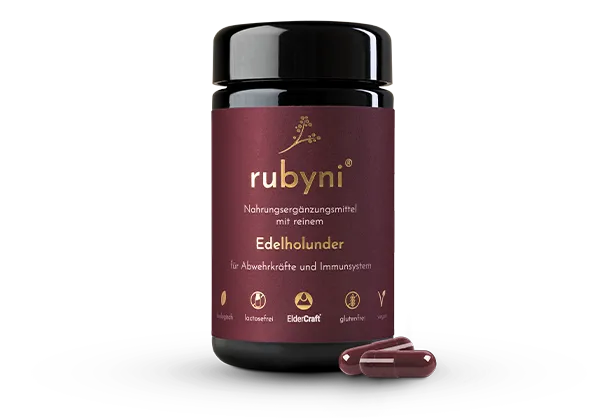
The Boost for Your Immune System
rubyni® elderberry
- rubyni® Elderberry contributes to the normal function of your immune system
- Each capsule contains 400 mg of elderberry extract
- Organic, vegan, lactose- and gluten-free
- Proven through studies