

The Christmas season is a time for indulgence: shared moments with family and friends, a festive atmosphere, and a wealth of culinary delights. However, this indulgent time often puts a strain on our digestion. We’ll show you how to enjoy the holidays healthily and without worry – without having to forgo culinary pleasures.
Oh, you sweet Christmas time!
As wonderful as it is to indulge in Christmas feasting, you should be a little careful. Rich meals with lots of fat, sugar, and alcohol can make digestion difficult. This can lead to bloating, constipation, and heartburn.1,2 Mindful eating can counteract this.3 Furthermore, how we eat influences the diversity of bacteria in our gut flora, also known as the microbiome.
The gut flora: The right balance for good digestion
The gut flora (microbiome) consists of all microorganisms in the digestive tract. Besides a small proportion of viruses and fungi, these are primarily bacteria, both beneficial and potentially harmful. They live together in a delicate balance that influences our gut health.4 When the ratio between the types of bacteria is balanced, our digestion functions perfectly. If the colonization of the gut with beneficial and potentially harmful bacteria is out of balance because the types and their numbers have changed, this also disrupts digestion. Such an imbalance is called dysbiosis. It can occur when the bacteria are fed with “unfavorable” food, such as a lot of fat, sugar, and alcohol. Possible symptoms include constipation, diarrhea, and bloating. The good news is that we can restore this balance ourselves – especially through a balanced diet.3, 5
Tips for good digestion: Advent special
You can support the balance of your gut flora with simple behaviors. The following tips apply all year round, but can be especially helpful right now to ensure you can enjoy the holidays without stomach aches.
Tip 1: Dietary fiber as food for good bacteria
Dietary fiber consists of largely indigestible plant-based food components that are not (completely) broken down in the small intestine but pass into the large intestine as is. There, they bind water and swell. This increases stool volume and stimulates bowel activity. They also promote a feeling of fullness for longer. Additionally, they have a prebiotic effect, meaning they serve as food for beneficial gut bacteria, which then multiply and keep the “bad” bacteria in check. Good sources of dietary fiber include vegetables, legumes, whole grains, nuts, and fruits. So, be sure to include plenty of vegetables in your Christmas dinner. Fiber-rich snacks on your Christmas plate include nuts and chestnuts.6, 7, 8
By the way: Did you know that berries are veritable fiber powerhouses? They also contain other components that can be beneficial for your gut health, such as anthocyanins. These phytochemicals can inhibit the growth of harmful microorganisms and promote the growth of beneficial bacteria.
Tip 2: Drinking plenty of fluids “flushes out” the intestines.
For dietary fiber to swell in the intestines, it needs plenty of fluids. If there is too little fluid in the body, the stool becomes harder to pass – constipation can result. Therefore, drink 1.5 liters of water (preferably still) or unsweetened tea throughout the day.6,10
Tip 3: Eat slowly for more enjoyment
Even during the festive feasting, try not to overeat. Perhaps you can adjust your menu accordingly and enjoy many small courses instead of one large meal. Take your time while eating and chew thoroughly. This will have two positive effects: you can enjoy your food more and simultaneously make digestion easier for your body.11
Tip 4: Christmas spices stimulate digestion
Spices like cinnamon, cardamom, saffron, and nutmeg are particularly popular in Germany at Christmas. In other cultures, they are a year-round staple. And for good reason: they are not only delicious but also make heavy dishes more digestible and can aid digestion. Healthy components such as essential oils and bitter compounds have antispasmodic and digestive properties.12, 13
Tip 5: Exercise instead of naps
Many people feel tired after eating. Lying down at this point, however, is not a good idea. Especially when the stomach is full, lying down can push stomach acid back up into the esophagus, potentially causing heartburn. A better solution: get moving. A classic post-meal walk promotes blood flow in the intestines and stimulates digestion. Regular exercise is therefore a good home remedy for constipation.6,14 Furthermore, you can stroll through the neighborhood feeling satisfied and content, admiring the Christmas decorations in windows and gardens.
Tip 6: Alcohol in moderation
A glass of sparkling wine for a toast, a glass of wine with a roast, mulled wine or eggnog at the Christmas market: for many, these are simply part of the pre-Christmas season. But keep in mind that alcohol is a neurotoxin that also has a dehydrating effect and disrupts the microbiome. Alcohol promotes the growth of harmful bacteria in the gut flora. Feel free to enjoy a glass or two – but in moderation.14, 15
Myth or truth: Does liquor help with digestion?
Unfortunately not. Alcohol slows down digestion rather than stimulating it. Better: A cup of coffee or herbal tea.14
Quellen
- DocCheck Flexikon. Völlegefühl. https://flexikon.doccheck.com/de/V%C3%B6llegef%C3%BChl, letzter Abruf am 10.12.2025
- Gesundheitsinformation.de. Sodbrennen und Refluxkrankheit. https://www.gesundheitsinformation.de/sodbrennen-und-refluxkrankheit.html, letzter Abruf am 10.12.2025
- CityPraxenBerlin. Dysbiose. https://gastroenterologie-berlin-mitte.de/dysbiose/, letzter Abruf am 10.12.2025
- DocCheck Flexikon. Mikrobiom. https://flexikon.doccheck.com/de/Mikrobiom, letzter Abruf am 10.12.2025
- DocMedicus. Gleichgewichtsstörung der Darmflora (Dysbiose) – Symptome – Beschwerden.
https://www.gesundheits-lexikon.com/Mikronaehrstoffmedizin-Vitalstoffe/Gleichgewichtsstoerung-der-Darmflora-Dysbiose/Symptome-Beschwerden, letzter Abruf am 10.12.2025 - Bayerisches Stattsministerium für Umwelt und Verbraucherschutz. Was tun, wenn … die Verdauung träge ist? Tipps für mehr Schwung im Darm. https://www.vis.bayern.de/essen_trinken/krankheiten/darmtraegheit.htm, letzter Abruf am 10.12.2025
- Deutsche Gesellschaft für Ernährung (DGE). Ausgewählte Fragen und Antworten zu Ballaststoffen. https://www.dge.de/gesunde-ernaehrung/faq/ausgewaehlte-fragen-und-antworten-zu-ballaststoffen/, letzter Abruf am 10.12.2025
- Science.orf.at. Tipps für Ballaststoffreiche Weihnachten. https://science.orf.at/stories/3227933/, letzter Abruf am 10.12.2025
- Du L et al. Effect of anthocyanins on metabolic syndrome through interacting with gut microbiota. Pharmacological Research 210 (2024). https://www.sciencedirect.com/science/article/pii/S1043661824004560, letzter Abruf am 10.12.2025
- Deutscher Allergie- und Asthmabund. Darm im Fokus. https://www.daab.de/ernaehrung/darmgesundheit, letzter Abruf am 10.12.2025
- Helios Gesundheitsmagazin. Darmgesundheit: Einfache Tipps für einen gesunden Darm. https://www.helios-gesundheit.de/magazin/news/02/darmgesundheit/, letzter Abruf am 10.12.2025
- SWR. Gesundheitsfördernde Gewürze. So gesund sind Zimt, Ingwer, Anis und Nelken. https://www.swr.de/leben/gesundheit/weihnachten-gewuerze-zimt-anis-nelke-ingwer-gesund-100.html, letzter Abruf am 10.12.2025
- Asklepios. Gewürze – Eine gute Prise Heilkraft. https://www.asklepios.com/konzern/gesundheitsmagazin/gesund-leben/gesunde-ernaehrung/gesunde-gewuerze, letzter Abruf am 10.12.2025
- Bayern 1. Verdauung anregen. Hilft ein Schnaps mach dem Essen der Verdauung? https://www.br.de/radio/bayern1/verdauung-anregen-100.html, letzter Abruf am 10.12.2025
- Pharmazeutische Zeitung. Alkoholsucht. Die Rolle des Darmmikrobioms. https://www.pharmazeutische-zeitung.de/die-rolle-des-darmmikrobioms-133696/, letzter Abruf am 15.12.2025
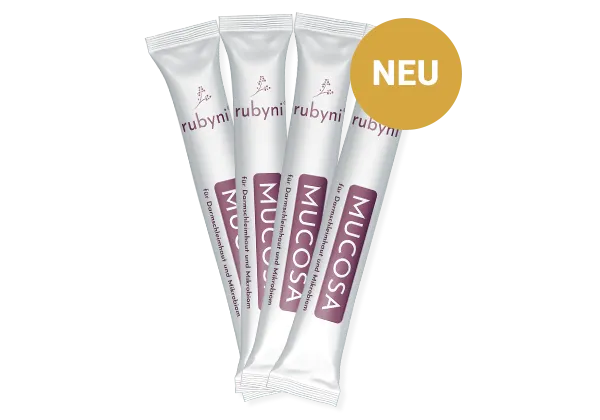
For intestinal mucosa
and microbiome
rubyni® MUCOSA
- Combination of fiber, vitamins, valuable plant extracts and the mineral calcium
- High-quality raw materials: organically grown elderberries and high-fiber kiwi fruit
- Prebiotic properties support microbiome diversity