
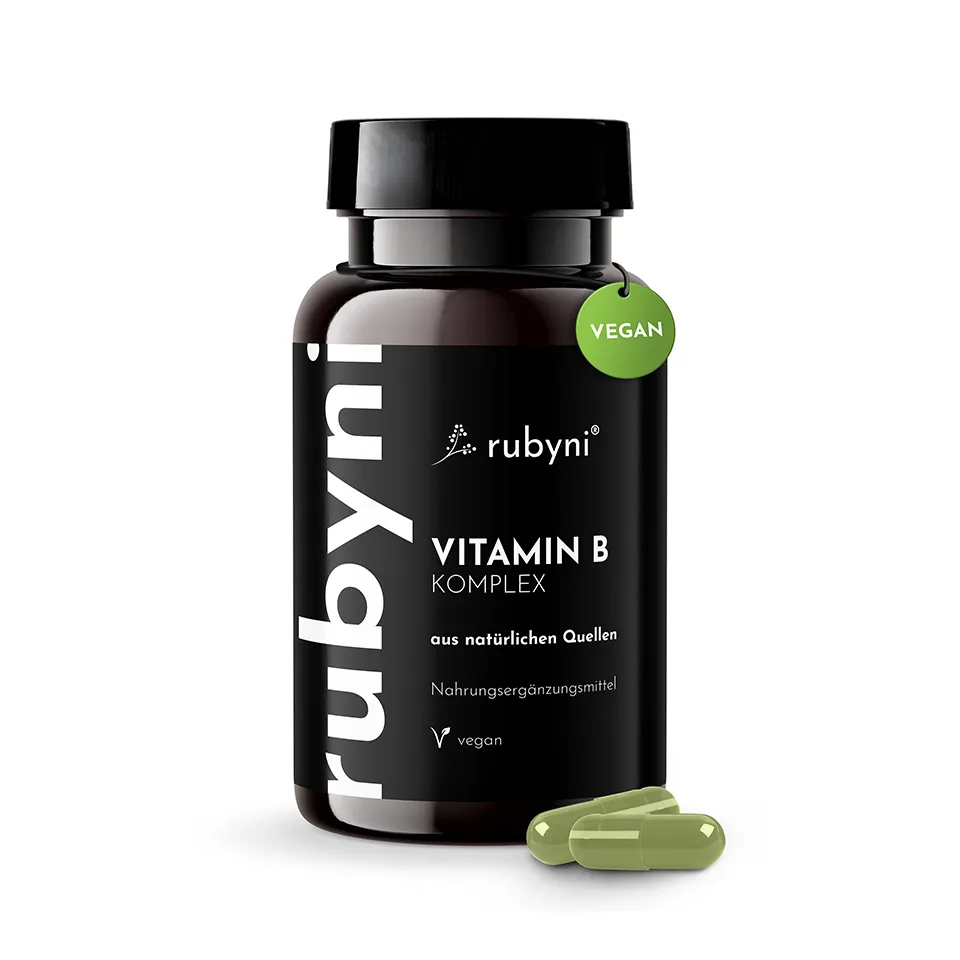
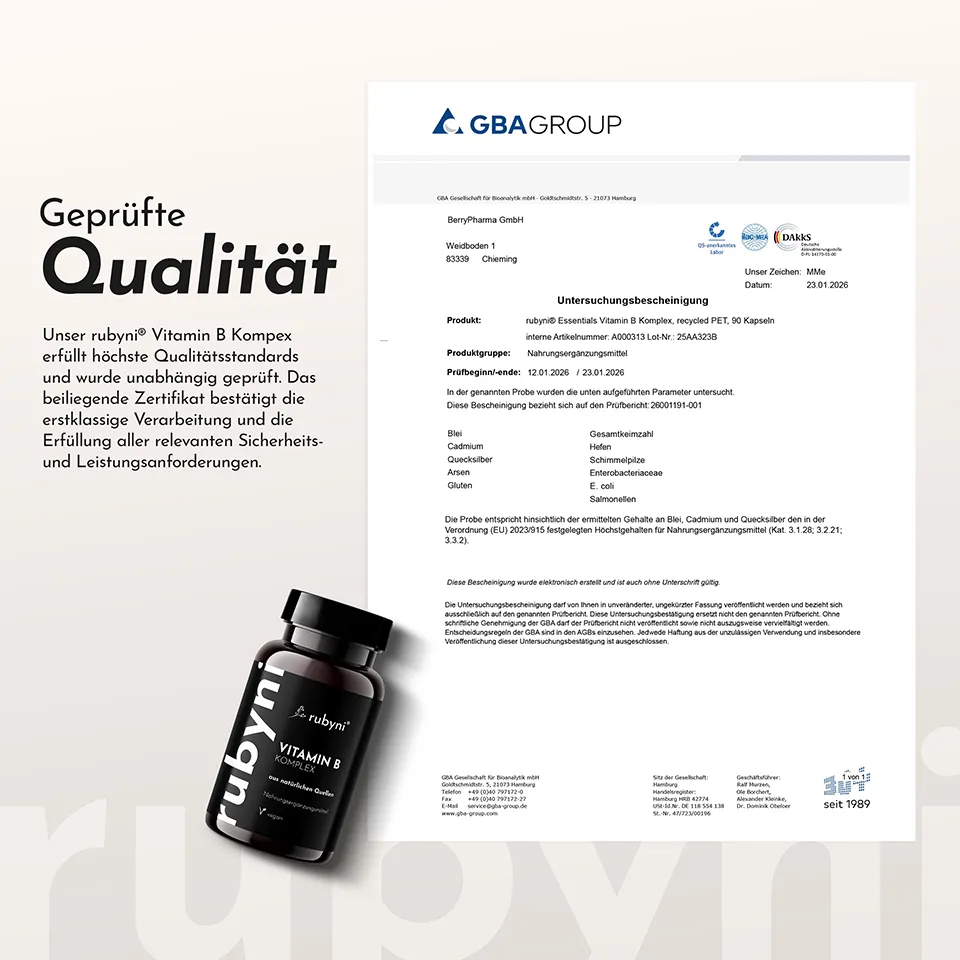
rubyni® Vitamin B Complex
Quinoa, Shiitake, and More – Vitamin B Complex with All Eight B Vitamins
A dietary supplement containing the full spectrum of B vitamins from quinoa sprouts, garlic, mushrooms, and sunflower seeds.
100% vegan, gluten-free, and lactose-free.
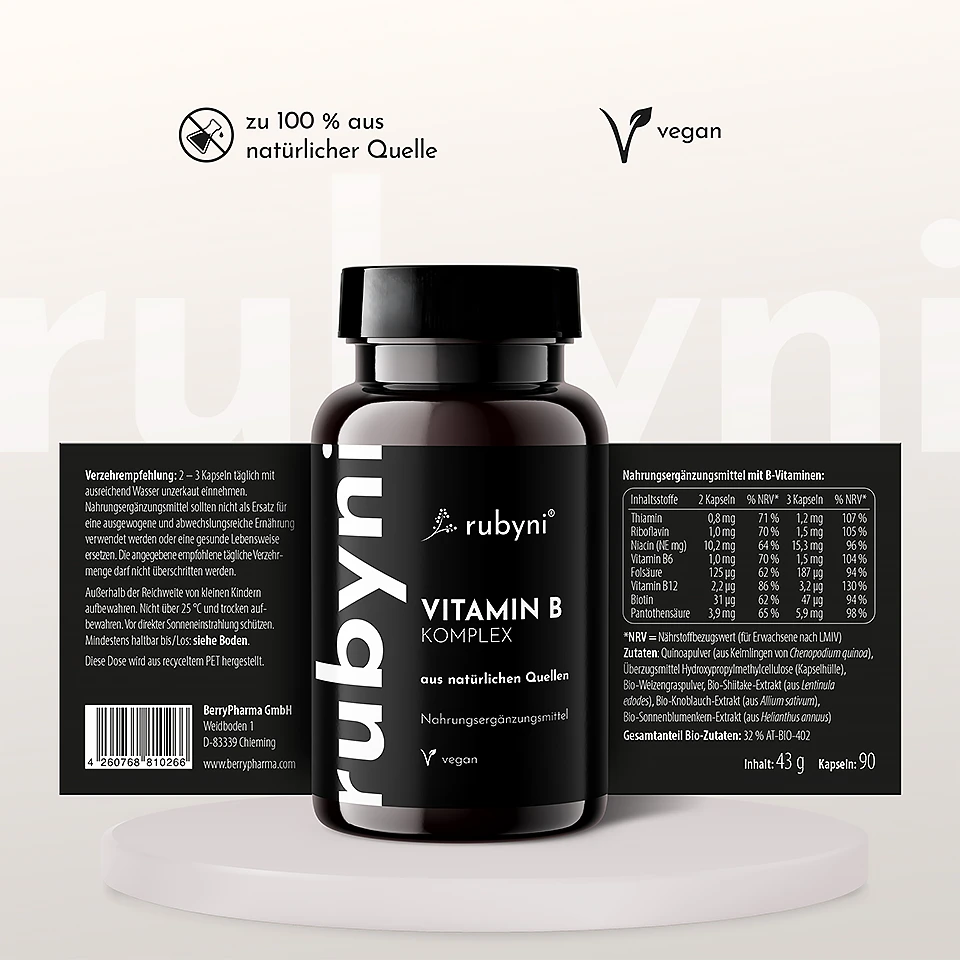
Ingredients: Quinoa powder (from Chenopodium quinoa sprouts), organic wheatgrass powder (from Triticum aestivum), organic shiitake extract (from Lentinula edodes), organic garlic extract (from Allium sativum), organic sunflower seed extract (from Helianthus annuus). Coating agent: hydroxypropylmethylcellulose (plant-based capsule shell).
Two capsules contain all eight B vitamins according to NRV* (see table)
Recommended Use: Take two to three capsules daily with plenty of liquid, without chewing. Do not exceed the recommended daily intake.
Note: Dietary supplements should not be used as a substitute for a balanced and varied diet or a healthy lifestyle.
*NRV = Nutrient Reference Value (for adults, as defined by the Food Information Regulation (LMIV))
60 capsules €59.90
Includes sales tax; shipping not included


rubyni® Vitamin B Complex from Natural Sources
For our rubyni Vitamin B Complex, we use quinoa sprouts that absorb B vitamins from a nutrient solution during the sprouting process—as well as extracts from garlic, mushrooms (shiitake), and sunflower seeds. Together, these ingredients provide the full spectrum of the eight B vitamins.
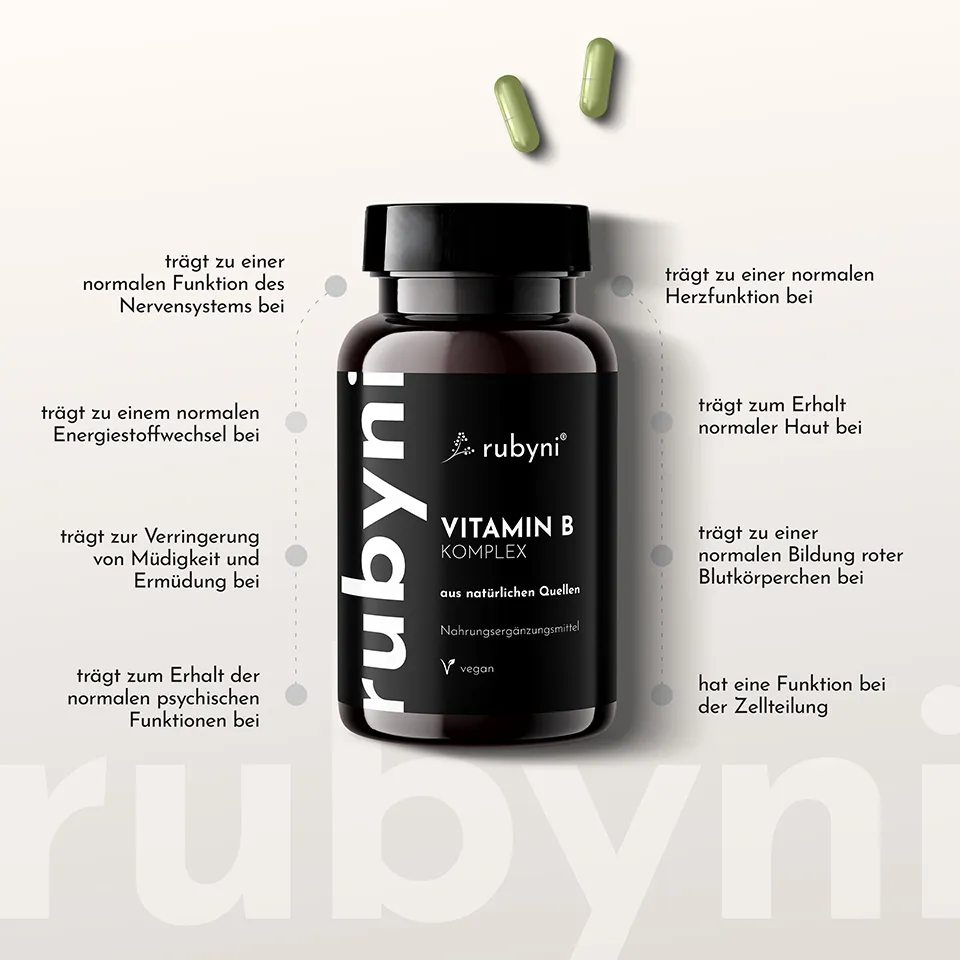
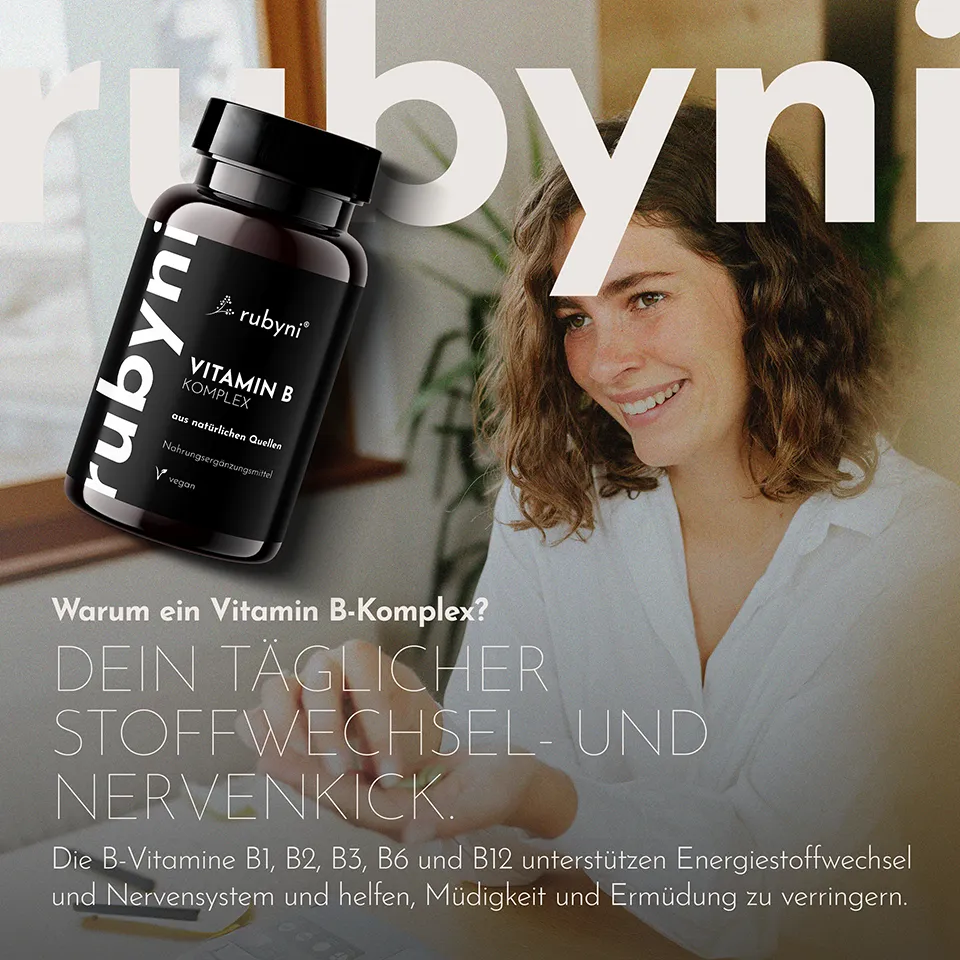
The B vitamins contained in this product perform various functions in your body.1,2 For example, certain B vitamins contribute to normal energy metabolism (B1, B2, B3, B5, B6, B7, B12), to the reduction of tiredness and fatigue (B2, B3, B5, B6, B9, B12), and to the normal functioning of the nervous system (B1, B2, B3, B6, B7, B12).
- Vitamin B Complex with all eight B vitamins
- Quinoa sprouts, as well as garlic, mushroom, and sunflower seed extracts
- Enriched with organic wheatgrass powder
- Two to three capsules daily
- Vegan, lactose-free, and gluten-free
- No added preservatives

How much B vitamins do you need?
There are a total of eight different B vitamins. Your body cannot produce them on its own—with the exception of vitamin B3, which it can produce in limited amounts³ —and, with the exception of vitamin B12, can store them only to a very limited extent.⁴ Therefore, they must be obtained regularly through your diet. A varied diet helps with this: It should include whole grains, seeds, and legumes, as well as a variety of fruits and vegetables. Animal products such as meat, fish, eggs, and dairy products also provide significant amounts of B vitamins.5
Your body needs different amounts of the individual B vitamins every day—ranging from micrograms (µg) to milligrams (mg). The German Nutrition Society (DGE) provides estimated values for these. In some cases, these differ between men and women.6–13
The European Union (EU) deviates from these in some respects with its Nutrient Reference Values (NRVs). These values serve as a guideline for the manufacture of dietary supplements when it comes to labeling vitamins and minerals. The EU’s recommendations apply to both genders.14
Recommended daily intake (some of which are estimates):
| B vitamin | DGE: Women | DGE: Men | EU: NRV |
| Thiamine (B1) (mg)11 | 1,0 | (by age) 1.3-1.1 | 1,1 |
| Riboflavin (B2) (mg)12 | (by age) 1.1-1.0 | (by age) 1.4-1.3 | 1,4 |
| Niacin (mg)13 | (by age) 13-11 | (by age) 16-14 | 16 |
| Vitamin B6 (mg)14 | 1,4 | 1,6 | 1,4 |
| Folic acid (µg)15 | 300 | 300 | 200 |
| Vitamin B12 (µg)8 | 4,0 | 4,0 | 2,5 |
| Biotin (µg)16 | 40 | 40 | 50 |
| Pantothenic acid (mg)17 | 5 | 5 | 6 |
The reference values apply to healthy adults. Individual needs may vary depending on personal circumstances. For example, these needs are often higher for pregnant and/or breastfeeding women.6-13
rubyni® Vitamin B COMPLEX — What’s in Our Capsules
In our rubyni Vitamin B Complex, the B vitamins are combined with ingredients from the extracts used. The capsules provide you with the full spectrum of the eight B vitamins. Depending on the dosage, the capsules can contribute varying percentages toward the daily requirement (according to the NRV): This ranges from 62 to 86% (for two capsules) or from 94 to 130% (for three capsules).
Each of our capsules contains the following amounts:
| Vitamin B | 2 capsules | % NRV | 3 capsules | % NRV |
| Thiamine | 0.8 mg | 71% | 1.2 mg | 107% |
| Riboflavin | 1.0 mg | 70% | 1.5 mg | 105% |
| Niacin | 10.2 mg | 64% | 15.3 mg | 96% |
| Vitamin B6 | 1,0 mg | 70% | 1,5 mg | 104% |
| Folic acid | 125 µg | 62% | 187 µg | 94% |
| Vitamin B12 | 2.2 µg | 86% | 3.2 µg | 130% |
| Biotin | 31 µg | 62% | 47 µg | 94% |
| Pantothenic acid | 3.9 mg | 65% | 5.9 mg | 98% |


rubyni® Vitamin B Complex at a Glance
rubyni Vitamin B Complex is a dietary supplement made from several vegan ingredients and contains all eight B vitamins.
Quinoa powder is derived from Chenopodium quinoa seedlings. These are grown in a specially formulated nutrient solution containing B vitamins. During germination, the plant absorbs the nutrients, which are then present in the plant material. A patented process is used in the production.
In addition, our product contains a blend of three different organic extracts from Tamil Nadu in southern India, which naturally contain various B vitamins: Our raw materials include garlic (Allium sativum), sunflower seeds (Helianthus annuus), and shiitake mushrooms (Lentinula edodes).
The recipe is rounded out with wheatgrass powder (from Triticum aestivum) grown organically in the EU. We use freshly harvested organic wheatgrass for this.
All raw materials are processed gently.
Why is rubyni® Vitamin B Complex gluten-free?
Quinoa (Chenopodium quinoa), also known as the Inca grain, is a so-called pseudocereal whose seeds are naturally gluten-free. Botanically, quinoa belongs to the goosefoot family, while cereal varieties such as wheat belong to the grass family.15 For our product, we use only the plant’s sprouts.
Although wheat (Triticum aestivum) is a gluten-containing grain, our product is made from wheatgrass. This consists of very young wheat plants that are harvested before the grains form.16
This means that rubyni Vitamin B Complex is gluten-free.
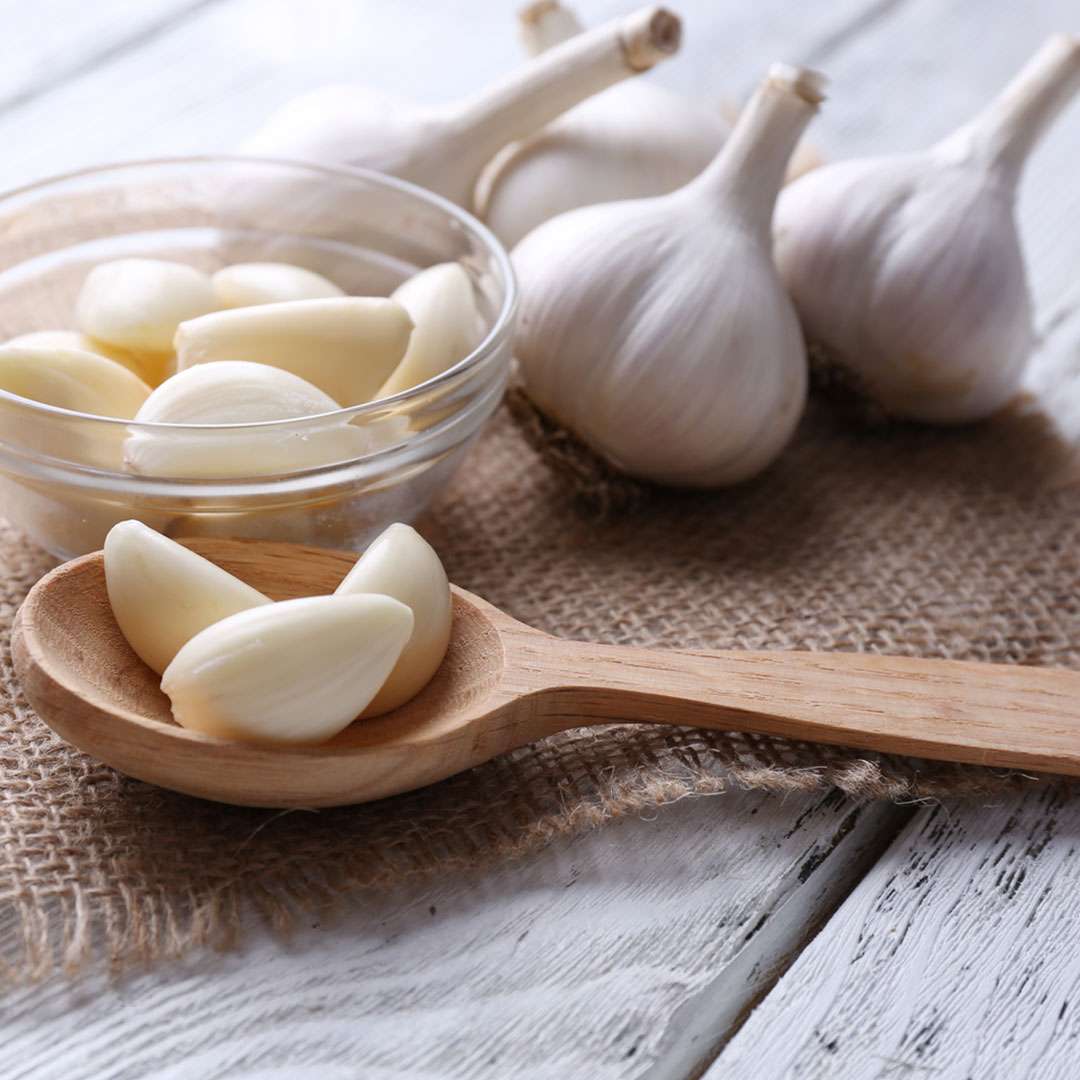

Good to know:
The vitamin B complex performs a variety of functions in the body
Eight vitamins, many functions—the B vitamins perform various tasks in our bodies. They play an important role in metabolism, that is, the biochemical processes that take place in the body. Often, two or more B vitamins are involved in the same processes.5 That is why it makes sense to consider them together.
By the way: There are gaps in the numbering of the B vitamins. This is because some substances that were originally classified as B vitamins are no longer considered vitamins today.
Vitamin B Complex and Energy Metabolism
The B vitamins help the body utilize the energy obtained from food for various processes. Seven of the eight B vitamins—B1, B2, B3, B5, B6, B7, and B12—support normal energy metabolism. In addition, vitamins B2, B3, B5, B6, B9, and B12 help reduce tiredness and fatigue.
What role do B vitamins play in the nervous system and mental health?
Selected B vitamins contribute to the normal functioning of the nervous system (B1, B2, B3, B6, B7, and B12) and support normal mental function (B1, B3, B6, B7, B9, and B12). In addition, pantothenic acid (B5) contributes to the normal synthesis (i.e., formation) and metabolism of certain neurotransmitters. Neurotransmitters are chemical messengers in the nervous system.
How do B vitamins support blood formation?
Vitamins B6 and B12 contribute to the normal formation of red blood cells, while vitamin B2 supports the maintenance of normal red blood cells. These cells, also known as erythrocytes, make up the largest group of blood cells and are responsible for transporting oxygen throughout the body.18 Folate, or folic acid (B9), also contributes to normal blood formation.
What role does the vitamin B complex play in the body (health claims)?
The eight individual vitamins in the B-complex contribute to various functions in your body, some of which overlap:
Thiamine (vitamin B1)
- contributes to normal energy metabolism
- contributes to the normal functioning of the nervous system
- contributes to normal psychological function
- Contributes to normal heart function
Riboflavin (vitamin B2)
- contributes to normal energy metabolism
- helps reduce tiredness and fatigue
- contributes to the normal functioning of the nervous system
- helps maintain healthy mucous membranes
- contributes to the maintenance of normal red blood cells
- helps maintain normal skin
- contributes to the maintenance of normal vision
- contributes to normal iron metabolism
- helps protect cells from oxidative stress
Niacin (nicotinic acid and nicotinamide) (obsolete: vitamin B3)
- contributes to normal energy metabolism
- helps reduce tiredness and fatigue
- contributes to the normal functioning of the nervous system
- contributes to normal psychological function
- helps maintain healthy mucous membranes
- helps maintain normal skin
Pantothenic acid (vitamin B5)
- contributes to normal energy metabolism
- helps reduce tiredness and fatigue
- contributes to normal synthesis and metabolism of steroid hormones, vitamin D and some neurotransmitters
- Contributes to normal mental performance
Vitamin B6 (pyridoxine)
- contributes to normal cysteine synthesis
- contributes to normal energy metabolism
- helps reduce tiredness and fatigue
- contributes to the normal functioning of the nervous system
- contributes to normal homocysteine metabolism
- contributes to normal protein and glycogen metabolism
- contributes to normal psychological function
- contributes to the normal formation of red blood cells
- Contributes to the regulation of hormone activity
Biotin (vitamin B7)
- contributes to normal energy metabolism
- contributes to the normal functioning of the nervous system
- contributes to normal psychological function
- contributes to normal macronutrient metabolism
- helps maintain normal hair
- helps maintain healthy mucous membranes
- helps maintain normal skin
Folate (synthetic: folic acid) (vitamin B9)
- contributes to the growth of maternal tissue during pregnancy
- contributes to normal amino acid synthesis
- contributes to normal haematopoiesis
- contributes to normal homocysteine metabolism
- contributes to normal psychological function
- contributes to the normal functioning of the immune system
- helps reduce tiredness and fatigue
- has a function in cell division
Vitamin B12 (cobalamin)
- contributes to normal energy metabolism
- contributes to the reduction of tiredness and fatigue (with B12)
- contributes to the normal functioning of the nervous system
- contributes to normal psychological function
- contributes to normal homocysteine metabolism (for B12)
- contributes to the normal function of the immune system (for B12)
- contributes to the normal formation of red blood cells
has a function in cell division
By the way: There are gaps in the numbering of the B vitamins. This is due to the fact that some substances that were originally included are no longer considered B vitamins.
What makes rubyni Vitamin B Complex so special?
rubyni Vitamin B Complex contains all eight B vitamins and combines various ingredients: quinoa sprouts, garlic, shiitake, and sunflower seed extracts. The vegan capsules contain a vitamin B complex combined with ingredients from the extracts used.
How many Rubyni Vitamin B Complex capsules should I take?
The recommended daily intake of rubyni Vitamin B Complex is two to three capsules. Depending on the B vitamin, two capsules provide between 62% and 86% of the Nutrient Reference Value (NRV*), while three capsules provide between 94% and 130%. The capsules should be swallowed whole with sufficient liquid.
*NRV = Nutrient Reference Value (for adults, as defined by the Food Information Regulation (LMIV))
Is Rubyni Vitamin B Complex vegan, gluten-free, and lactose-free?
Yes, rubyni Vitamin B Complex consists of 100% vegan ingredients—in a plant-based capsule shell made of hydroxypropyl methylcellulose (HPMC): quinoa powder, garlic, shiitake, and sunflower seed extracts, and organic wheatgrass powder. This powder is derived from young wheat plants without grains. The formula is not only vegan, but also lactose- and gluten-free.
What role does the vitamin B complex play in energy metabolism?
Seven of the eight B-complex vitamins—B1, B2, B3, B5, B6, B7, and B12—contribute to normal energy metabolism. In addition, vitamins B2, B3, B5, B6, B9, and B12 help reduce tiredness and fatigue.
How do B vitamins contribute to blood formation?
Within the vitamin B complex, several vitamins play a role in blood formation: Vitamins B6 and B12 contribute to the normal formation of red blood cells, while vitamin B2 helps maintain them. In addition, folate (B9) supports normal blood formation.
References:
1) German Food Association. Vitamin B Complex—What Does That Mean? As of February 25, 2020. https://www.lebensmittelverband.de/de/aktuell/20200225-Vitamin-B-komplex-erklaert, last accessed May 29, 2026
2) Commission Regulation (EU) No. 432/2012 of May 16, 2012, establishing a list of permitted other health claims made on foods, other than those referring to the reduction of disease risk and to children’s development and health. As of August 20, 2025. https://eur-lex.europa.eu/legal-content/DE/TXT/?uri=CELEX%3A02012R0432-20250820, last accessed on May 29, 2026
3) Gesundheit.gv.at. Niacin. As of: October 31, 2024. Published by: Federal Ministry of Labor, Social Affairs, Health, Care, and Consumer Protection (BMASGPK). http://gesundheit.gv.at/leben/ernaehrung/vitamine-mineralstoffe/wasserloesliche-vitamine/niacin.html, last accessed on June 24, 2026
4) Pharmazeutische Zeitung (PZ).de. Essential for Metabolism. As of November 4, 2011. https://www.pharmazeutische-zeitung.de/ausgabe-402011/essential-for-metabolism/, last accessed on June 24, 2026
5) gesund.bund.de. Vitamin B Deficiency. As of February 26, 2022. Published by: Federal Ministry of Health (BMG) https://gesund.bund.de/vitamin-b-mangel, last accessed on May 29, 2026
6) German Nutrition Society (DGE). Reference value: Thiamine (Vitamin B1). As of 2015. https://www.dge.de/wissenschaft/referenzwerte/thiamin/, last accessed on May 29, 2026
7) German Nutrition Society (DGE). Reference value: Riboflavin (Vitamin B2). As of 2015. https://www.dge.de/wissenschaft/referenzwerte/riboflavin/, last accessed on May 29, 2026
8) German Nutrition Society (DGE). Reference value: Niacin. As of 2015. https://www.dge.de/wissenschaft/referenzwerte/niacin/, last accessed on May 29, 2026
9) German Nutrition Society (DGE). Reference value: Pantothenic acid. As of 2021. https://www.dge.de/wissenschaft/referenzwerte/pantothensaeure/, last accessed on May 29, 2026
10) German Nutrition Society (DGE). Reference value: Vitamin B6. As of: 2019. https://www.dge.de/wissenschaft/referenzwerte/Vitamin-B6/, last accessed on May 29, 2026
11) German Nutrition Society (DGE). Reference value: Biotin. As of 2020. https://www.dge.de/wissenschaft/referenzwerte/pantothensaeure/, last accessed on May 29, 2026
12) German Nutrition Society (DGE). Reference value: Folate. As of 2015. https://www.dge.de/wissenschaft/referenzwerte/folat/, last accessed on May 29, 2026
13) German Nutrition Society (DGE). Reference value: Vitamin B₁₂ (cobalamin). As of 2018. https://www.dge.de/wissenschaft/referenzwerte/vitamin-b12/, last accessed on May 29, 2026
14) Regulation (EU) No. 1169/2011 of the European Parliament and of the Council of October 25, 2011. https://eur-lex.europa.eu/legal-content/DE/TXT/PDF/?uri=CELEX:32011R1169&from=EN, last accessed on May 29, 2026
15) Federal Information Center for Agriculture. What Exactly Are Pseudocereals? As of July 25, 2025. Published by: Federal Office for Agriculture and Food (BLE). https://www.landwirtschaft.de/tier-und-pflanze/pflanze/getreide/was-sind-eigentlich-pseudogetreide, last accessed on May 29, 2026
16) USDA (United States Department of Agriculture). Confirmation of gluten-free status of wheatgrass. As of January 2, 2017. https://www.ars.usda.gov/research/publications/publication/?seqNo115=322552, last accessed on June 24, 2026
17) German Nutrition Society (DGE). Selected Questions and Answers on Pantothenic Acid. As of September 10, 2025. https://www.dge.de/gesunde-ernaehrung/faq/ausgewaehlte-fragen-und-antworten-zu-pantothensaeure/, last accessed on June 24, 2026
18) Thieme – via medici. Erythrocytes: Function and Life Cycle. Updated: February 9, 2026. Georg Thieme Verlag KG. https://viamedici.thieme.de/lernmodul/546413/530414/erythrozyten+function+and+life+cycle, last accessed on June 24, 2026