
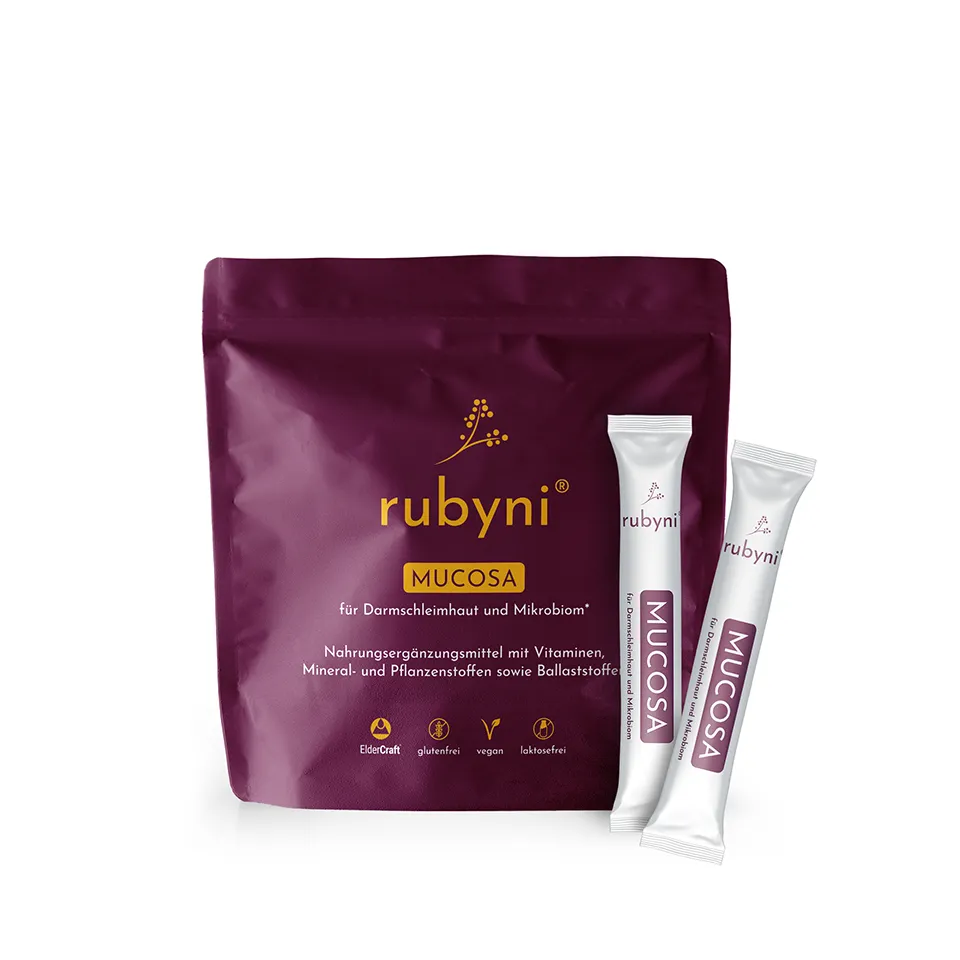

rubyni® Mucosa
Fiber, Vitamins, and More
: Focus on the Gut
A dietary supplement with a high fiber content for your digestive system. A combination of dietary fiber, valuable plant extracts, vitamins, and the mineral calcium. Contains high-quality organic elderberries and fiber-rich kiwifruit. 100% vegan, gluten-free, and lactose-free.
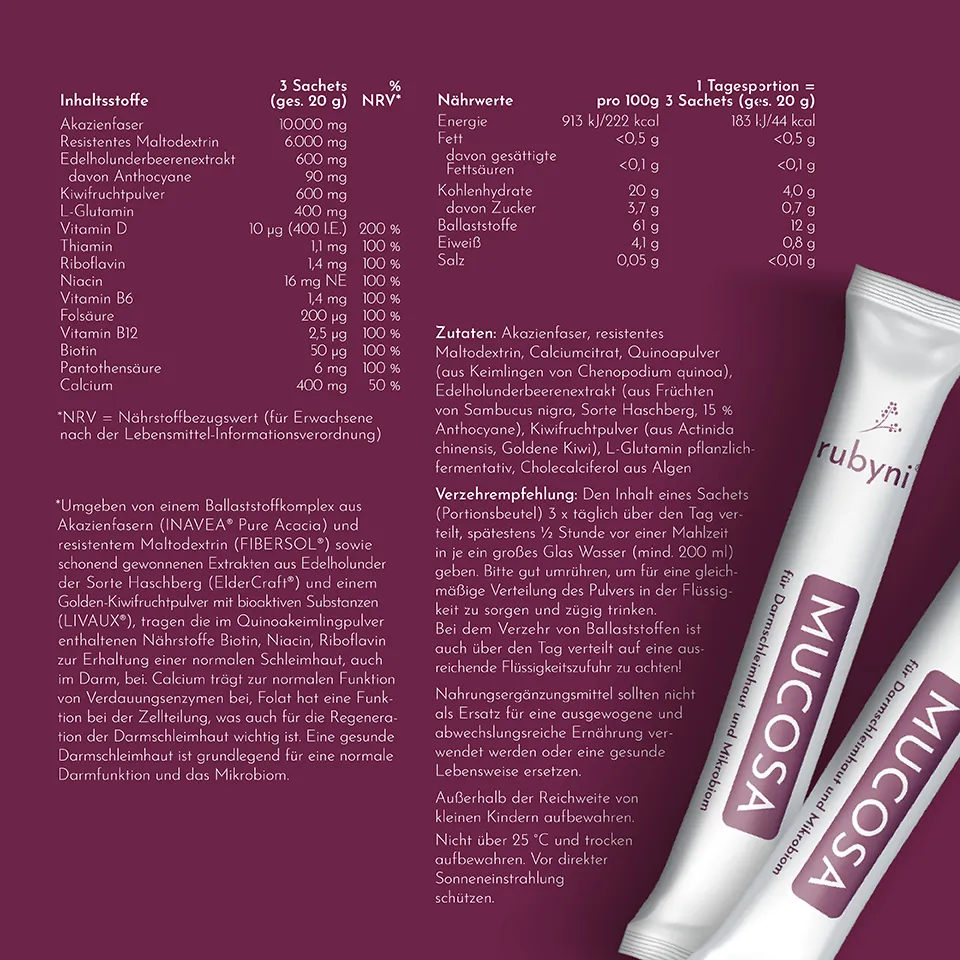
Ingredients: Acacia fiber, resistant maltodextrin, calcium citrate, quinoa powder (from seedlings of Chenopodium quinoa, source of B vitamins), elderberry extract(Sambucus nigra, Haschberg variety, 15% anthocyanins), kiwi fruit powder (from Actinida chinensis, golden kiwi), L-glutamine vegetable-fermentative, cholecalciferol from algae (vitamin D)
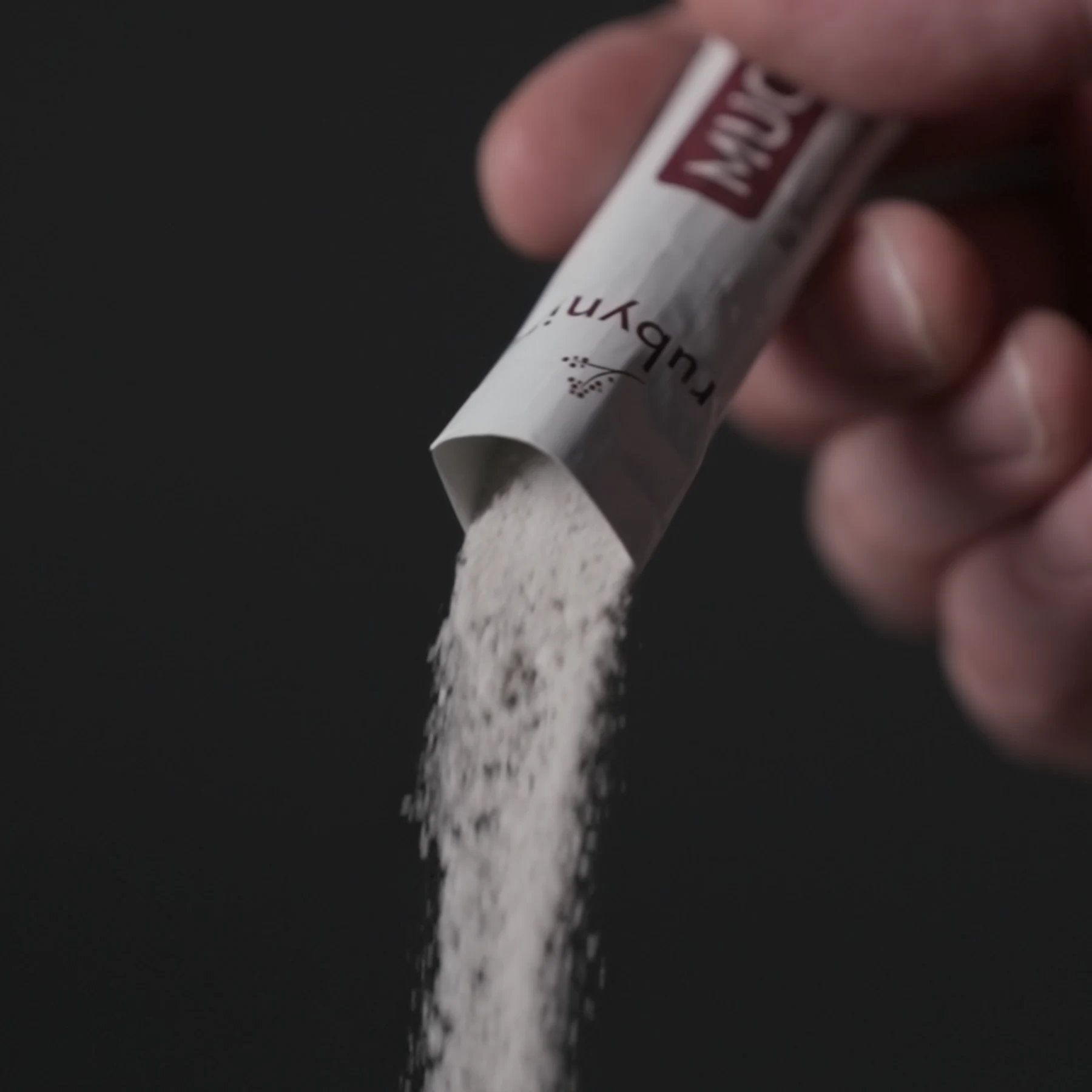
Recommended intake: Three sachets daily, spread out throughout the day. Add the contents of one sachet to a large glass of water (200 ml) at least half an hour before a meal. Please stir well to ensure the powder is evenly distributed in the liquid, and drink promptly. Do not exceed the recommended daily intake.
Suitable lab self-test: To analyze your gut microbiome, you can purchase a suitable lab self-test here and conveniently perform it at home.
Notes: When consuming dietary fiber, be sure to drink enough fluids throughout the day! Allow one to two hours between taking medication and rubyni Mucosa.
Dietary supplements should not be used as a substitute for a balanced and varied diet or a healthy lifestyle.
45 sachets, €47.90
Includes VAT, plus shipping



rubyni® Mucosa – Developed for You by Experts
Dietary Fiber, Vitamins, and Valuable Plant Extracts
rubyni Mucosa combines various dietary fibers (acacia fiber, resistant maltodextrin, kiwi fruit powder) with a high-quality full-spectrum extract of black elderberry, calcium in the form of calcium citrate, plant-derived fermented L-glutamine, and vitamin D. Additionally, quinoa germ powder provides natural B vitamins.
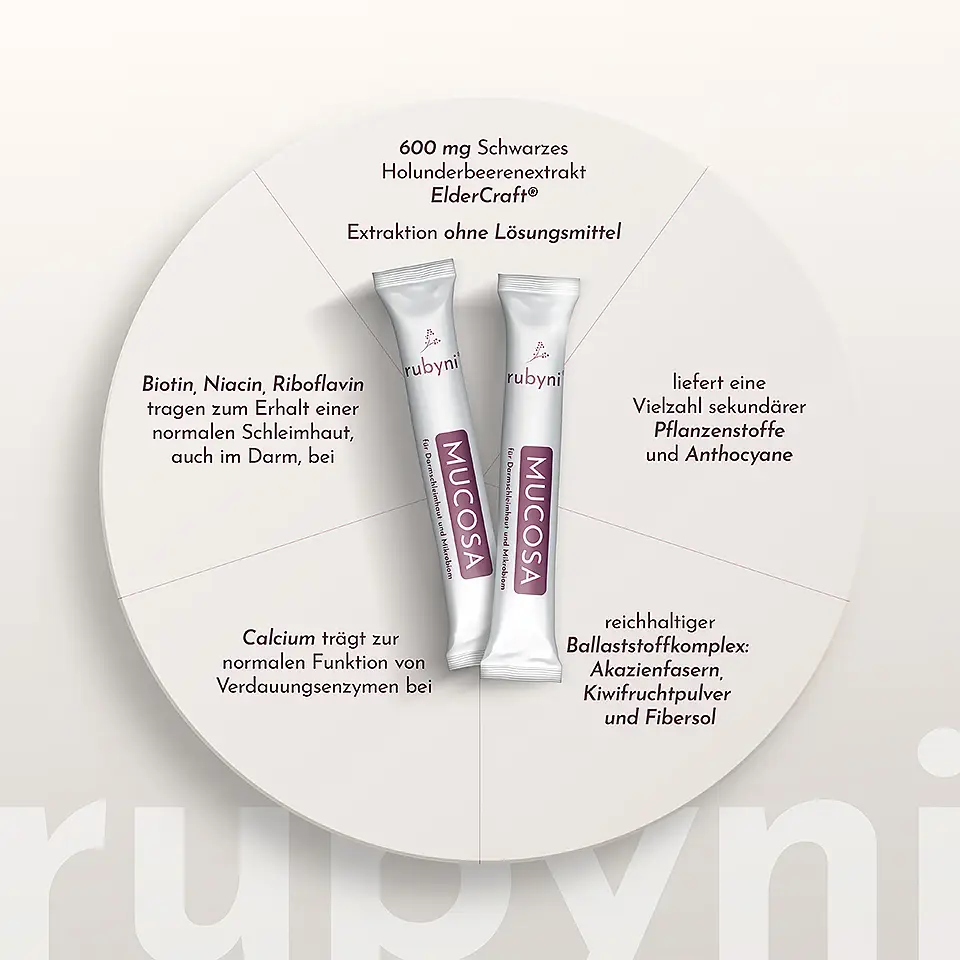
The vitamins biotin, niacin, and riboflavin (vitamin B2) help maintain normal mucous membranes. This includes the mucous membranes of the digestive tract. Calcium contributes to the normal function of digestive enzymes. Folate, vitamin B12, vitamin D, and calcium play a role in cell division; calcium also plays a role in cell differentiation.1
- A daily serving (three sachets) provides 12 g of dietary fiber—that’s 40% of the daily reference value for adults#
- Acacia fiber, resistant maltodextrin, and kiwi fruit powder as sources of dietary fiber
- High-quality elderberry extract: 600 mg of ElderCraft® with 90 mg of anthocyanins (phytochemicals) per daily dose
- Quinoa germ powder as a source of all eight B vitamins
- With vitamin D (from algae), calcium, and L-glutamine
- Vegan; lactose- and gluten-free
- No added preservatives or fillers
#According tothe German Nutrition Society (DGE)2
The formula was developed exclusively by Prof. Dr. rer. nat. Michaela Döll, one of the leading experts in nutritional medicine.
How much fiber is recommended?
Fiber in Everyday Life: It’s All About Getting the Right Amount
Based on available evidence regarding bowel function, the European Food Safety Authority (EFSA) considers 25 g of dietary fiber per day to be a sufficient amount for normal bowel movements in adults.3 The German Nutrition Society (DGE) sets its guideline slightly higher, at at least 30 g of dietary fiber per day.4
In Germany, however, actual intake falls well short of these recommendations: Women consume an average of 18 g of fiber per day, while men consume 19 g.
If you want to increase your fiber intake, you should do so gradually to allow your digestive system to adjust to the change in diet. Since fiber absorbs water, it is also important to drink enough fluids.4
Foods rich in dietary fiber, such as fruits and vegetables, legumes, nuts, and seeds, as well as whole-grain products, are part of a balanced and healthy diet.4 In certain situations, it may be beneficial to increase dietary fiber intake through dietary supplements.
rubyni Mucosa - What's in Our Sachets
| Ingredients | 3 sachets (daily dose) | % NRV |
| Acacia fiber | 10,000 mg | – |
| Resistant maltodextrin | 6,000 mg | – |
| Edelholunderberry extract | 600 mg | |
| – of which anthocyanins | 90 mg | |
| Kiwi fruit powder | 600 mg | |
| L-Glutamine | 400 mg | |
| Vitamin D | 10 µg (400 IU) | 200% |
| Thiamine | 1.1 mg | 100% |
| Riboflavin | 1.4 mg | 100% |
| Niacin | 16 mg NE | 100% |
| Vitamin B6 | 1.4 mg | 100% |
| Folic acid | 200 µg | 100% |
| Vitamin B12 | 2.5 µg | 100% |
| Biotin | 50 µg | 100% |
| Pantothenic acid | 6 mg | 100% |
| Calcium | 400 mg | 50% |
rubyni® Mucosa at a Glance
Dietary fiber combined with plant extracts, vitamins, and calcium
rubyni Mucosa is a dietary supplement rich in fiber. The product combines various sources of fiber with a black elderberry extract, as well as vitamins and the mineral calcium.
- Full-spectrum extract from noble elderberries (ElderCraft), black elder (Sambucus nigra), Haschberg variety, with a standardized anthocyanin content. These phytochemicals are a type of polyphenol.
We extract the extract using purely mechanical, solvent-free methods. To do this, we use the patented Iprona Polyphenol Technology (IPT for short), which largely preserves the fruit matrix.
The elderberries come from Styria and Burgenland in Austria, where the berries find suitable climatic conditions. They are grown there for us by more than 200 farmers. The harvested fruit travels only short distances to the processing facility. - Acacia fibers derived from the natural resin of the Acacia seyal tree, which grows wild in Africa. The resin is collected locally, cleaned, and dried after harvest. It is then processed in France.
- Resistant maltodextrin is produced from cornstarch through a controlled enzymatic conversion.
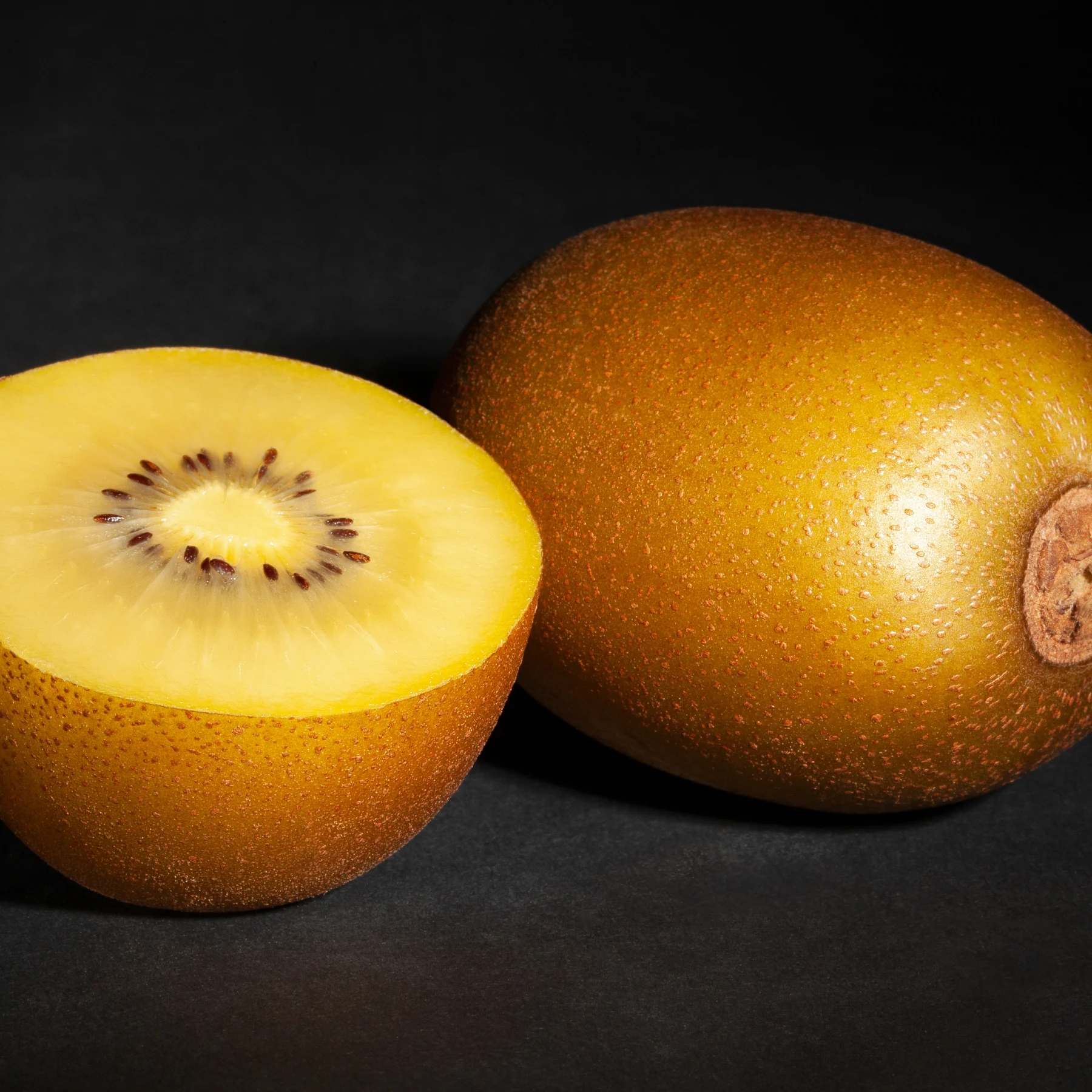
- Kiwi fruit powder made from the golden kiwi (Actinidia chinensis) provides both soluble and insoluble dietary fiber. The fruit we use, which we process in its entirety, comes from New Zealand. Freeze-drying gently removes water from the fruit while largely preserving its natural structure.
- Quinoa powder derived from seedlings (sprouted quinoa plants) of Chenopodium quinoa. It contains all eight B vitamins: thiamine, riboflavin (vitamin B2), niacin, pantothenic acid, biotin, folic acid, vitamin B6, and vitamin B12.
- Calcium citrate is a calcium compound that provides the essential mineral calcium.
- L-glutamine is produced through plant-based fermentation.
- Our vitamin D3 (cholecalciferol) is derived from non-GMO algae and is therefore vegan. The algae are cultivated in Europe.

What are water-soluble and water-insoluble dietary fibers?
A small but subtle difference
The enzymatic digestion of ingested food and the absorption of nutrients into the body take place primarily in the small intestine, the upper section of the intestine. Dietary fiber consists mainly of plant-based food components that are not digested, or only partially digested, in the small intestine. These are generally complex carbohydrates. They are found particularly in whole-grain products, legumes, fruits, vegetables, nuts, and seeds. Undigested food components pass largely unchanged into the lower section, the large intestine. That is where the majority of your gut bacteria live.
Based on their properties, dietary fibers can be classified into
- Water-insoluble dietary fiber: It can bind water, thereby increasing the volume of the contents in the stomach and intestines. This category includes, in particular, cellulose, an important component of plant cell walls. It is found, for example, in whole grains, seeds, and fibrous vegetables—as well as in the skin of kiwifruit.
- Water-soluble dietary fiber: It binds a lot of water and often forms a gel-like mass. Many of these are fermented by gut bacteria, meaning they are metabolized by microorganisms. They include pectins from fruits (such as those in kiwi fruit pulp) and vegetables, as well as inulin (found, for example, in chicory and asparagus), and also resistant maltodextrin and acacia fiber.
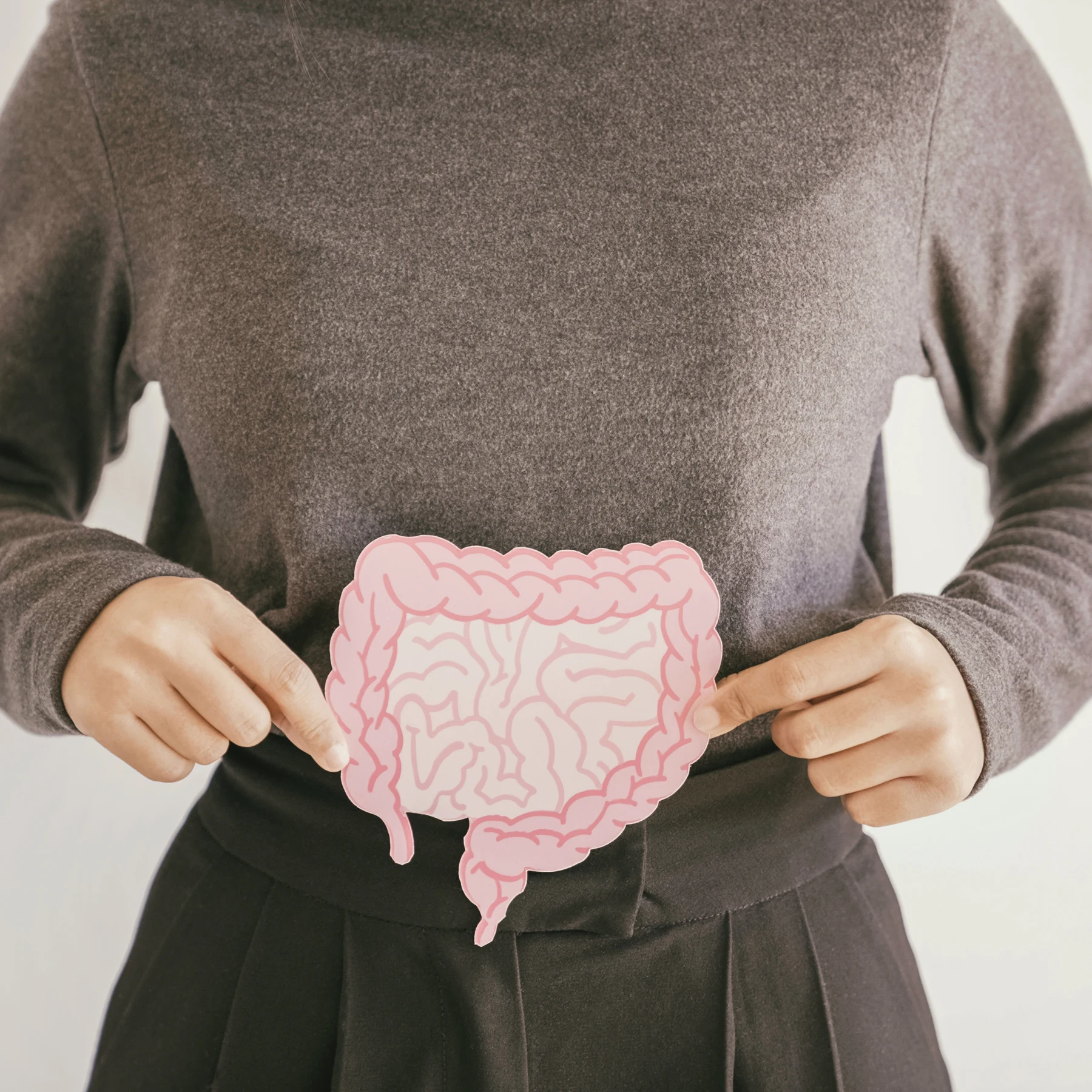
What is the difference between the intestine, the intestinal mucosa, and the microbiome?
Our Gut: An Organ of Superlatives
The intestine is an organ of superlatives. Did you know that your small intestine alone is several meters long? Its mucous membrane features countless finger-shaped projections—known as intestinal villi—which greatly increase its internal surface area. This is important so that it can effectively absorb nutrients from food.10,11 In addition, the intestinal mucosa forms a natural barrier between the contents of the intestine andthe inside of yourbody.12 The intestinal mucosa performs important functions in digestion and nutrient absorption. It is one of the tissues that completely renews itself within a few days.13 The frequent cell division requires a supply of energy and various nutrients.
Various micronutrients play roles in metabolism. For example, folate, vitamin B12, vitamin D, and calcium play a role in cell division. Calcium also plays a role in cell differentiation. Biotin, niacin, riboflavin, thiamin (B1), pantothenic acid, vitamins B6, and B12 contribute to normal energy metabolism. And last but not least, biotin (B7) contributes to the normal metabolism of macronutrients. Macronutrients are carbohydrates, proteins, and fats. Among other things, they serve as energy sources and building blocks for various tissues in the body.
The vitamins biotin, niacin, and riboflavin (vitamin B2) help maintain normal mucous membranes. This includes the mucous membranes of the digestive tract. The digestive tract comprises the digestive canal from the mouth to the anus, including the esophagus, stomach, and intestines.
Calcium contributes to the normal function of digestive enzymes.
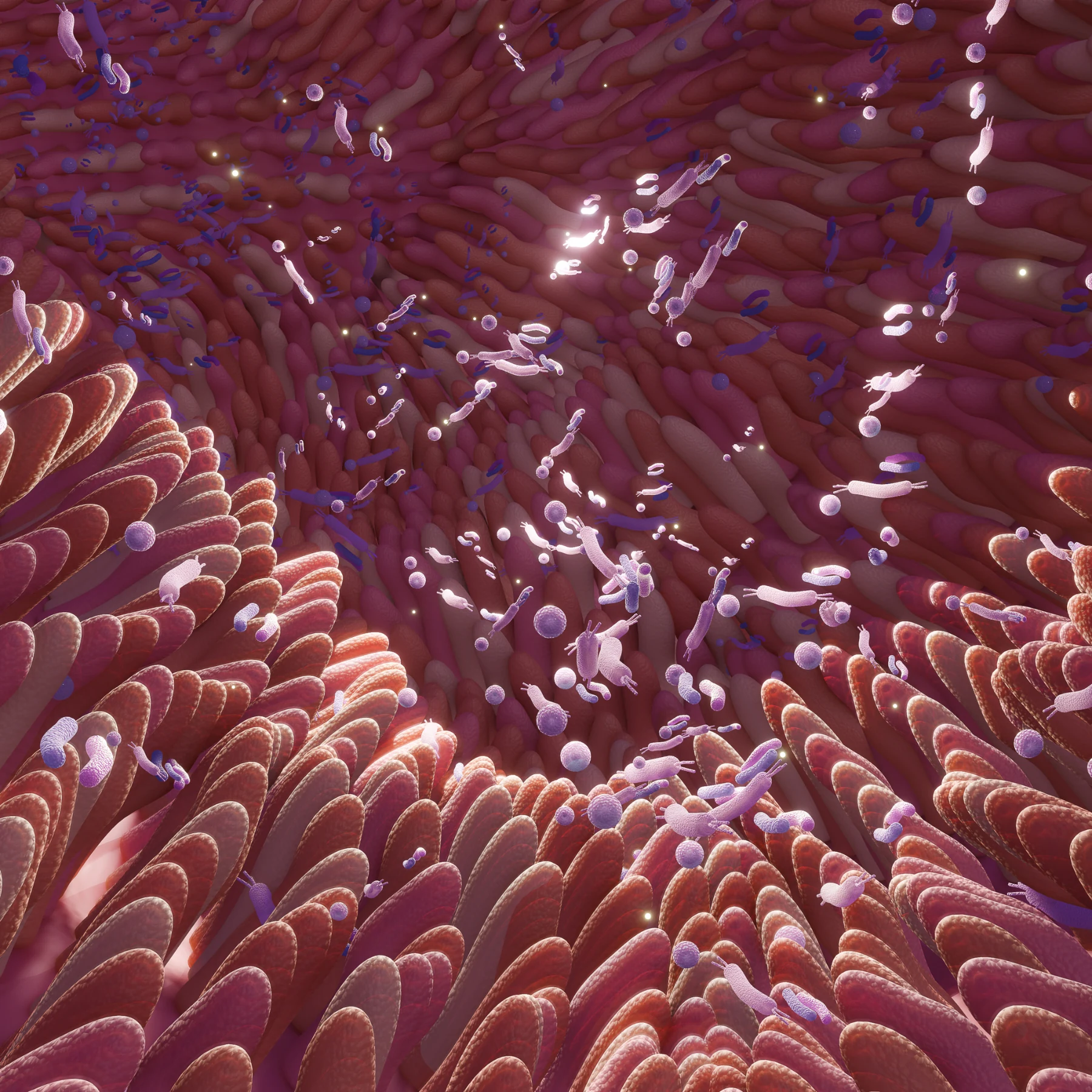
The gut is home to the largest community of microorganisms that naturally colonize the human body: the gut microbiota.
What is the microbiome?
And what determines the composition of the gut microbiota?
The gut flora—also known as the gut microbiota—consists of all the microorganisms that live in your gut: bacteria, archaea, protozoa, fungi (primarily yeasts), and viruses. Bacteria make up the largest proportion of this community. The gut flora is a natural component of the human digestive system, and each person has a unique composition of gut bacteria. Experts often refer to this as the microbiome. This term encompasses the totality of microorganisms, including their genes. Metabolic products and environmental conditions are also frequently included in this definition.14
The gut microbiota consists of many different types of bacteria. Its composition can vary greatly from person to person. High microbial diversity is the subject of numerous scientific studies. Current research is focused on determining what the ideal composition of your gut bacteria should be. This is because it is highly individual and depends on various factors. These include age and lifestyle, medication use, and environmental conditions, as well as diet. Experts are investigating, for example, how the type and quality of food are related to the microbiome.15 This is because your gut bacteria can use various components of your diet as a food source. For the flora in your large intestine, this also includes certain types of dietary fiber, which they break down and metabolize into various metabolic products. The specific substances produced and their quantities, in turn, depend on your bacteria. Intensive research has long been underway to determine the exact nature of the relationships between diet and the microbiome, the interactions between humans and the microorganisms in their gut, and the significance of individual bacterial species.15,16,17
These brands are featured in rubyni® Mucosa
We use high-quality, purely plant-based, natural, brand-name raw materials in our products:

ElderCraft ® is a high-quality dry extract made from black elderberries (Sambucus nigra, ‘Haschberg’ variety), produced using a special, patented form of ultrafiltration—without solvents or additives. What makes it special: This process preserves the berries’ entire fruit matrix—that is, their natural composition and the ratio of valuable phytochemicals.

LIVAUX ®isan award-winning, clinically proven golden kiwi powder that is high in fiber, slow fermenting, antioxidant and rich in enzymes. Kiwi powder made from the golden kiwi fruit. The fruit comes exclusively from New Zealand and is gently freeze-dried and ground so that the bioactive substances and natural nutrient content are retained.

Inavea™ PURE ACACIA consists of organic acacia fibers with a minimum soluble fiber content of 90%. To produce it, raw acacia gum from Africa is processed in France, while its chemical structure remains unchanged. The acacia fibers are well tolerated and can have a positive effect on the diversity of gut bacteria. In addition, Inavea™—a Nexira brand—is produced sustainably and meets the highest quality standards.

FIBERSOL ® is a patented dietary fiber made from corn. This resistant maltodextrin dissolves completely in liquid and can be drunk. Fibersol ® is a very well tolerated, water-soluble dietary fiber with more than 100 studies and scientific articles on its health benefits. FIBERSOL® – a soluble dietary fiber produced by ADM/Matsutani Singapore Pte, Ltd.

Vitamin D3V ®is a vegan vitamin D3 that is sustainably obtained from GMO-free algae in European farming.
*Surrounded by a fiber complex of acacia fibers (INAVEA® Pure Acacia) and resistant maltodextrin (FIBERSOL ®), as well as gently obtained extracts of elderberry of the Haschberg variety (ElderCraft ®) and a golden kiwi fruit powder with bioactive substances (LIVAUX ®), the nutrients biotin, niacin, riboflavin contained in the quinoa seedling powder contribute to the maintenance of a normal mucous membrane, also in the intestine. Calcium contributes to the normal function of digestive enzymes, folate has a function in cell division, which is important for the regeneration of the intestinal mucosa. A healthy intestinal mucosa is essential for normal intestinal function and the microbiome.
What role do micronutrients play in the product?
Quinoa powder contains all eight B vitamins. They perform a wide range of functions in the body. These include, among others:
thiamine (B1), riboflavin (B2), niacin, pantothenic acid (B5), vitamin B6, biotin (B7), and vitamin B12
- contributes to normal energy metabolism
Biotin, niacin, and riboflavin (vitamin B2)
- help maintain normal mucous membranes.
Folate (vitamin B9) and vitamin B12
- play a role in cell division.
Biotin (vitamin B7)
- contributes to the normal metabolism of macronutrients.
Vitamin D (cholecalciferol)
- plays a role in cell division.
Calcium
- contributes to the normal function of digestive enzymes.
- plays a role in cell division and cell differentiation.
What makes rubyni Mucosa so special?
rubyni Mucosa is a high-fiber dietary supplement. It provides 12 g of fiber per daily serving (three sachets), derived from acacia fiber, resistant maltodextrin, and golden kiwifruit. The 12 g corresponds to 40% of the DGE’s recommended daily intake of dietary fiber. The product also contains an extract of noble elderberries with a standardized anthocyanin content, quinoa powder (as a source of B vitamins), calcium in the form of calcium citrate, L-glutamine, and vegan vitamin D3 (cholecalciferol from algae).
How many sachets of rubyni Mucosa should I take each day?
The recommended intake for rubyni Mucosa is three sachets per day—spaced out throughout the day. This provides you with 12 g of dietary fiber. It is best to add the contents of one sachet to a large glass of water (200 ml) at least half an hour before a meal, stir well to ensure the powder is evenly distributed in the liquid, and drink it quickly. When consuming dietary fiber, be sure to drink enough fluids throughout the day. Allow one to two hours between taking medication and rubyni Mucosa.
What is resistant maltodextrin?
Regular maltodextrin is a mixture of sugar building blocks (short-chain carbohydrates) made from starch. Your body can digest these sugars and derive just as much energy from them as from regular sugar, even though maltodextrin does not taste sweet.9 In contrast, your digestive enzymes cannot break down resistant maltodextrin into its sugar building blocks, or can do so only to a limited extent. It is therefore largely indigestible and is thus classified as (soluble) dietary fiber.9 The reason: During a targeted chemical-enzymatic conversion, the sugar building blocks are linked differently. Your digestive enzymes cannot break down the bonds formed in this way.
What is L-glutamine?
Glutamine is an amino acid that your body can use to build proteins. It is the most abundant amino acid in the human body.5 Amino acids can exist in two different forms: as so-called L- and D-isomers. Proteins naturally contain almost exclusively the L-form.6 Your body can produce glutamine on its own—particularly in the muscles. In addition, it can be obtained through food. The amino acid is found in particular in soybeans, peanuts, beef, dairy products, and wheat.7
What are acacia fibers?
When the bark of certain acacia species is damaged, sap oozes out. This sap hardens into resin, which is collected, dried, and ground into a fine powder. The acacia fibers obtained in this way consist of approximately 80 to 90 percent soluble dietary fiber.8
Is rubyni Mucosa vegan and free of additives?
Yes, rubyni Mucosa contains only vegan ingredients: The sachets combine dietary fiber from acacia fibers (a natural tree resin), resistant maltodextrin, and golden kiwi powder with an extract of noble elderberries, calcium in the form of calcium citrate, L-glutamine derived from plant-based fermentation, and vegan vitamin D3 from algae. The product is lactose-free and gluten-free. We do not use any preservatives or fillers.
References:
1 Commission Regulation (EU) No. 432/2012 of May 16, 2012, establishing a list of permitted other health claims made on foods, other than those referring to the reduction of disease risk and to children’s growth and health. As of August 20, 2025. https://eur-lex.europa.eu/legal-content/DE/TXT/?uri=CELEX%3A02012R0432-20250820, last accessed on September 1, 2026
2 German Nutrition Society (DGE) e.V. Dietary Fiber. As of 2021. https://www.dge.de/wissenschaft/referenzwerte/ballaststoffe/, last accessed on September 7, 2026
3 EFSA. Scientific Opinion on Dietary Reference Values for Carbohydrates and Dietary Fiber. EFSA Journal 2010; 8 (3): 1462. https://efsa.onlinelibrary.wiley.com/doi/pdf/10.2903/j.efsa.2010.1462, last accessed on September 7, 2026
4 German Nutrition Society (DGE) e.V. Selected Questions and Answers on Dietary Fiber. Updated: May 7, 2026. https://www.dge.de/gesunde-ernaehrung/faq/ausgewaehlte-fragen-und-antworten-zu-ballaststoffen/, last accessed September 8, 2026
5 Burgerstein Foundation. Glutamine—An Overview. https://www.burgerstein-foundation.ch/de-DE/fachbereich/aktuelles-aus-wissenschaft-praxis/glutamin-ein-ueberblick, last accessed on September 8, 2026
6 Georg Thieme Verlag KG via medici. Amino Acids: Structure. Updated: June 1, 2026. https://viamedici.thieme.de/lernmodul/548783/539486/aminos%C3%A4uren+struktur, last accessed on September 8, 2026
7 DocCheck-Flexikon. Glutamine. Last updated: March 21, 2024. DocCheck Community GmbH. https://flexikon.doccheck.com/de/Glutamin, last accessed on September 7, 2026
8 Zielinski, J. Acacia Fibers: Is the Hype Justified? As of May 8, 2026. Georg Thieme Verlag KG. https://natuerlich.thieme.de/blog/detail/akazienfasern-ist-der-hype-berechtigt-5070, last accessed on September 7, 2026
9 Consumer Advice Center. Isn’t resistant maltodextrin sugar? As of May 29, 2024. https://www.lebensmittelklarheit.de/fragen-antworten/ist-resistentes-maltodextrin-kein-zucker, last accessed on September 7, 2026
10 Helander HF et al. Surface area of the digestive tract—revisited. Scand J Gastroenterol. June 2014; 49 (6): 681-9. https://www.tandfonline.com/doi/10.3109/00365521.2014.898326
11 Lippstadt Hospital. Small Intestine, Large Intestine, and Rectum. https://klinikumlippstadt.de/duenn-dick-und-mastdarm.html, last accessed on September 8, 2026
12 Rüffer, A et al. The Intestinal Mucosa as a Hotspot: A Key Factor in IBD and Related Conditions. As of March 28, 2023. Georg Thieme Verlag KG. https://natuerlich.thieme.de/spezialthemen/ced/detail/hotspot-darmschleimhaut-994, last accessed on September 8, 2026
13 Kai, Y. Intestinal villus structure contributes to even shedding of epithelial cells. Biophys J. February 16, 2021; 120 (4): 699-710. https://www.cell.com/biophysj/fulltext/S0006-3495(21)00033-3
14 Backes, G. for the German Nutrition Society (DGE) blog. The Microbiome—An Update for Nutrition Counseling. As of: March 2026. https://www.dge.de/blog/2026/das-mikrobiom-update-fuer-die-ernaehrungsberatung/, last accessed on September 7, 2026/
15 Dahl WJ et al. Chapter Eight – Diet, Nutrients, and the Microbiome. Prog Mol Biol Transl Sci. 2020; 171: 237-263. https://www.sciencedirect.com/science/chapter/bookseries/abs/pii/S1877117320300508
16 Makki K et al. The Impact of Dietary Fiber on Gut Microbiota in Host Health and Disease. Cell Host & Microbe. June 13, 2018; 23 (6): 705-715. https://www.cell.com/cell-host-microbe/fulltext/S1931-3128(18)30266-X
17 David LA et al. Diet rapidly and reproducibly alters the human gut microbiome. Nature. Dec. 11, 2013; 505 (7484): 559–563. https://pmc.ncbi.nlm.nih.gov/articles/PMC3957428/