
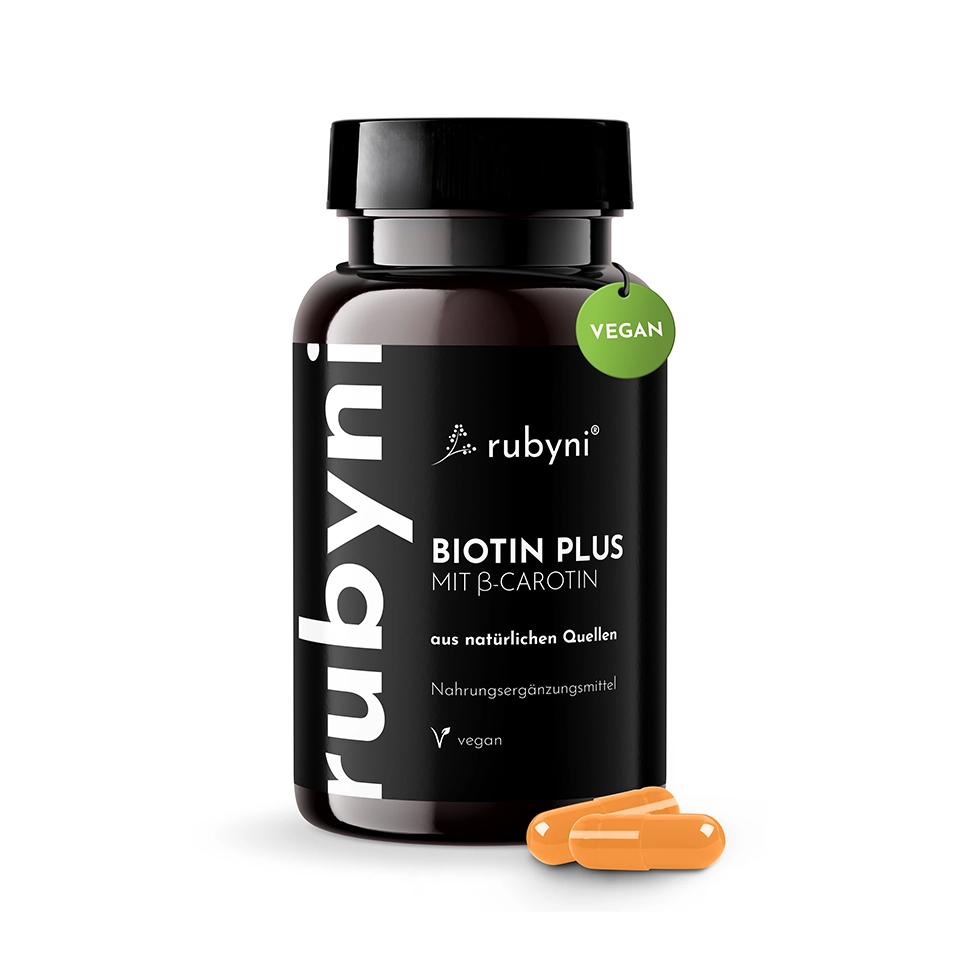
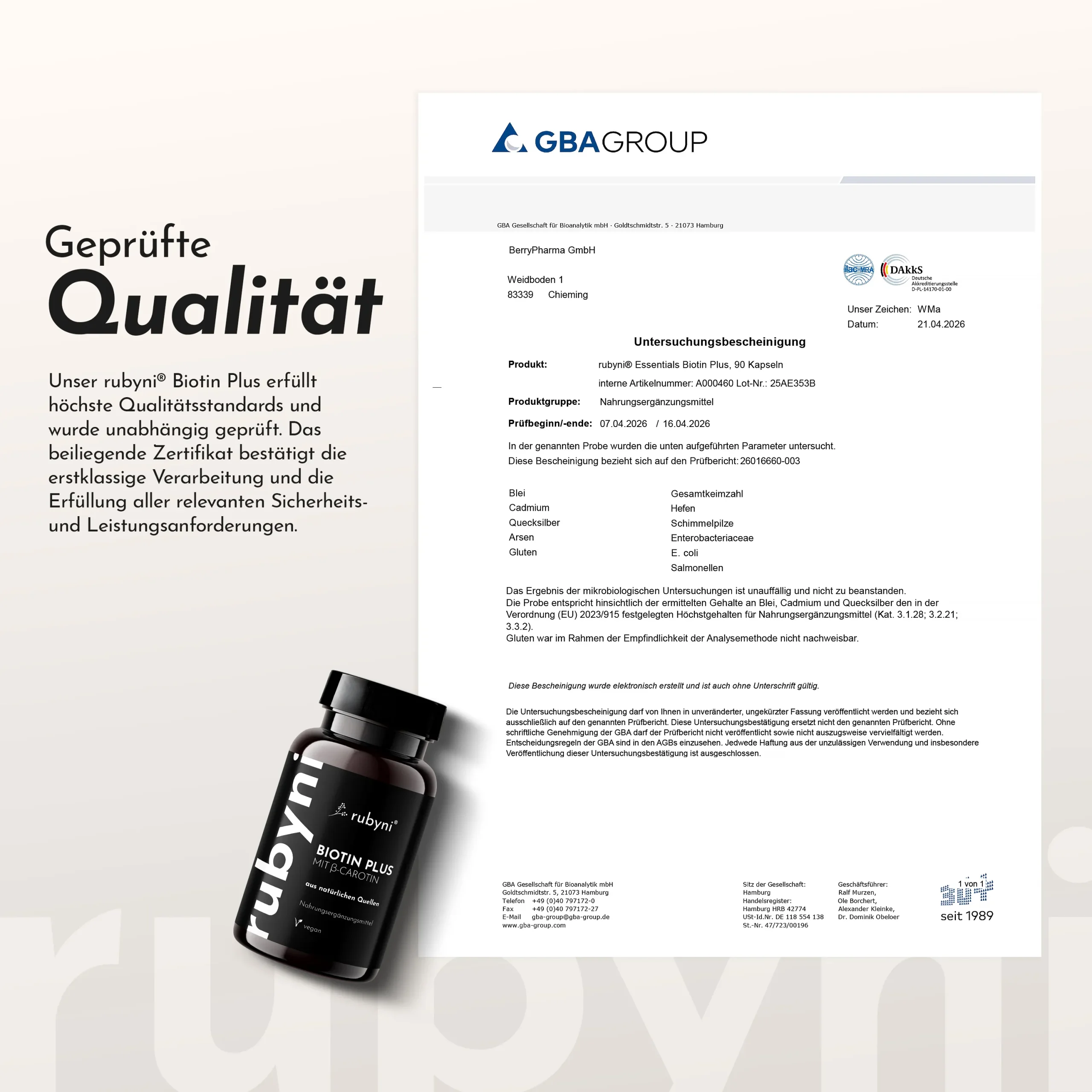
rubyni® Biotin Plus
Biotin and beta-carotene from 100% plant-based sources
Dietary supplement containing biotin and beta-carotene from natural sources.
100% vegan, gluten-free, and lactose-free.
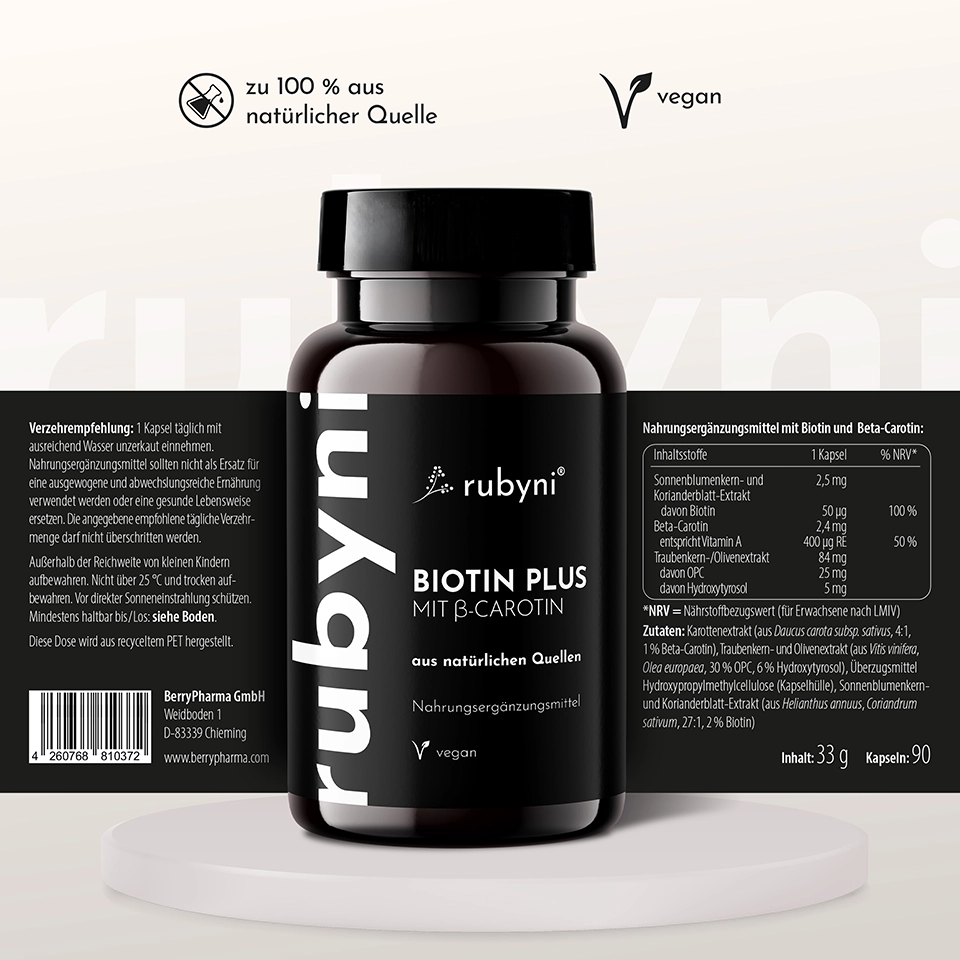
Ingredients: Carrot extract (from Daucus carota subsp. sativus, 4:1, 1% beta-carotene), grape seed and olive extract (from Vitis vinifera, Olea europaea, 30% OPC, 6% hydroxytyrosol), coating agent hydroxypropyl methylcellulose (vegetable capsule shell), sunflower seed and cilantro leaf extract (from Helianthus annuus, Coriandrum sativum, 27:1, 2% biotin).
One capsule contains 2.5 mg of sunflower seed and cilantro leaf extract and provides 50 μg of biotin (vitamin B7). This provides 100% of the daily value according to the NRV*. It also contains 2.4 mg of beta-carotene. This is equivalent to 400 µg RE** of vitamin A (50% of the NRV*).
Recommended Use: Take one capsule daily with plenty of water, without chewing, with a meal. To ensure that your body can absorb the fat-soluble beta-carotene, the meal should also contain healthy fats. Do not exceed the recommended daily intake.
*NRV = Nutrient Reference Value (for adults, as defined by the Food Information Regulation (LMIV)
** RE = Retinol Equivalent (Explanation: see below)
60 capsules €59.90
Includes sales tax; shipping not included

rubyni® Biotin Plus from Natural Sources
For our rubyni Biotin Plus, we use only natural and plant-based sources: The vegan capsules contain an organic-quality sunflower seed and cilantro leaf extract that naturally contains biotin (vitamin B7). It also contains a carrot extract that provides beta-carotene (provitamin A).
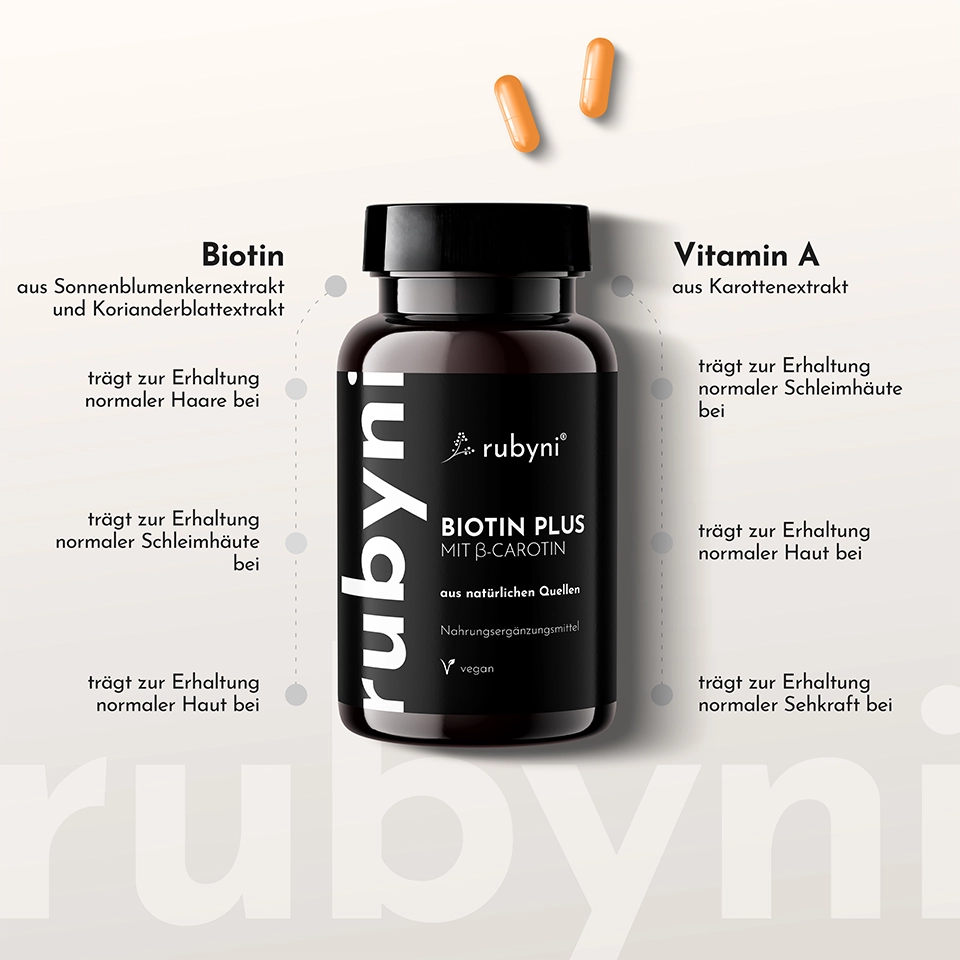
Biotin (vitamin B7) plays a role in numerous processes in your body. For example, this B vitamin helps maintain normal hair, skin, and mucous membranes. Beta-carotene is a precursor to vitamin A. Vitamin A also helps maintain normal skin and mucous membranes, as well as normal vision.1
- Organic-quality biotin from sunflower seed and cilantro leaf extract
- One capsule provides 50 μg of biotin
- 2.4 mg of beta-carotene from carrot extract per capsule. Beta-carotene is a precursor to vitamin A
- Also contains two polyphenols: OPC (oligomeric proanthocyanidins) from grape seeds and hydroxytyrosol from olive extracts
- Vegan, lactose-free, and gluten-free
- No added preservatives

How much biotin does your body need?
Your body’s cells cannot produce biotin (= vitamin B7) on their own, and the body can store this water-soluble vitamin only in limited amounts in the muscles, liver, and brain.2 You must therefore obtain it regularly through your diet.
A healthy and varied diet is an important foundation for ensuring an adequate intake. Biotin is found in various foods in varying amounts. Sources include yeast, liver, eggs, legumes such as soybeans and lentils, as well as whole-grain products and oatmeal.3,10,11
The German Nutrition Society (DGE)4 provides the following estimates for an adequate intake:
- For adults and pregnant women, 40 micrograms (µg) of biotin daily,
- 45 µg per day for breastfeeding women.
The European Union (EU) specifies 50 µg of biotin per day as the so-called nutrient reference value (NRV for short).5 In the manufacture of dietary supplements, the NRV serves as a guideline for the labeling of vitamins and minerals.
In certain life situations, dietary biotin intake can vary from person to person. Dietary supplements can help ensure an adequate intake of biotin.
How much vitamin A does your body need?
The vitamin A value also includes beta-carotene. However, provitamin A carotenoids are absorbed by the body and converted into retinol to varying degrees. To account for this, various calculation systems are used in nutrition science. Depending on the system, different conversion factors are used for the vitamin A activity of beta-carotene:7,8
- Retinol Equivalent (RE): 6 µg of beta-carotene is equivalent to 1 µg of vitamin
- Retinol Activity Equivalent (RAE): 12 µg of beta-carotene is equivalent to 1 µg of vitamin A. This takes into account the fact that plant-based provitamin A is absorbed less efficiently by the body and converted into vitamin A less efficiently.
The DGErecommends9
- Women: 700 μg of vitamin A or 700 μg of RAE per day,
- 800 μg RAE daily for pregnant women and men 65 years of age and older,
- Men aged 19 to 64: 850 μg RAE per day.
The nutrient reference value (NRV) established by the EU is 800 µg of vitamin A per day and applies uniformly to adults of both sexes.5


Beta-Carotene and Vitamin A: What’s the Difference?
The term “vitamin A” refers to various fat-soluble compounds with vitamin A activity. They play a role in various normal bodily functions, such as vision, immune function, and cell differentiation. The most important form of vitamin A is retinol. Natural sources of preformed vitamin A are exclusively animal-based foods such as liver, fish, eggs, and dairy products.6,7
In contrast, beta-carotene (β-carotene) is a precursor to vitamin A and is therefore also called provitamin A. It belongs to the group of carotenoids found in plants. However, only a small portion of these plant pigments serve as precursors to vitamin A—beta-carotene is the most important of these: Your body can convert it into vitamin A.6,7
Beta-carotene, which is also fat-soluble, is found, for example, in carrots, apricots, pumpkin, and bell peppers, as well as in green leafy vegetables. For people who follow a vegetarian or vegan diet, foods rich in beta-carotene are an important source of vitamin A.7
rubyni® Biotin Plus – What’s in Our Capsules
One rubyni Biotin Plus capsule contains 2.5 mg of sunflower seed and cilantro leaf extract and provides 50 µg of biotin (= vitamin B7). This amount corresponds to 100% of the daily biotin requirement based on the Nutrient Reference Value (NRV*).
In addition, our product contains carrot extract, which provides 2.4 mg of beta-carotene. This amount corresponds to 400 µg of vitamin A equivalents (RE) and thus 50% of the daily requirement for vitamin A according to the NRV.
In addition, each capsule of rubyni Biotin Plus contains 84 mg of a grape seed and olive extract that contains two phytochemicals (polyphenols): 25 mg of OPC (oligomeric proanthocyanidins) and 5 mg of hydroxytyrosol.
*NRV = Nutrient Reference Value (for adults, as defined by the Food Information Regulation (LMIV))
Note: Dietary supplements should not be used as a substitute for a balanced and varied diet or a healthy lifestyle.
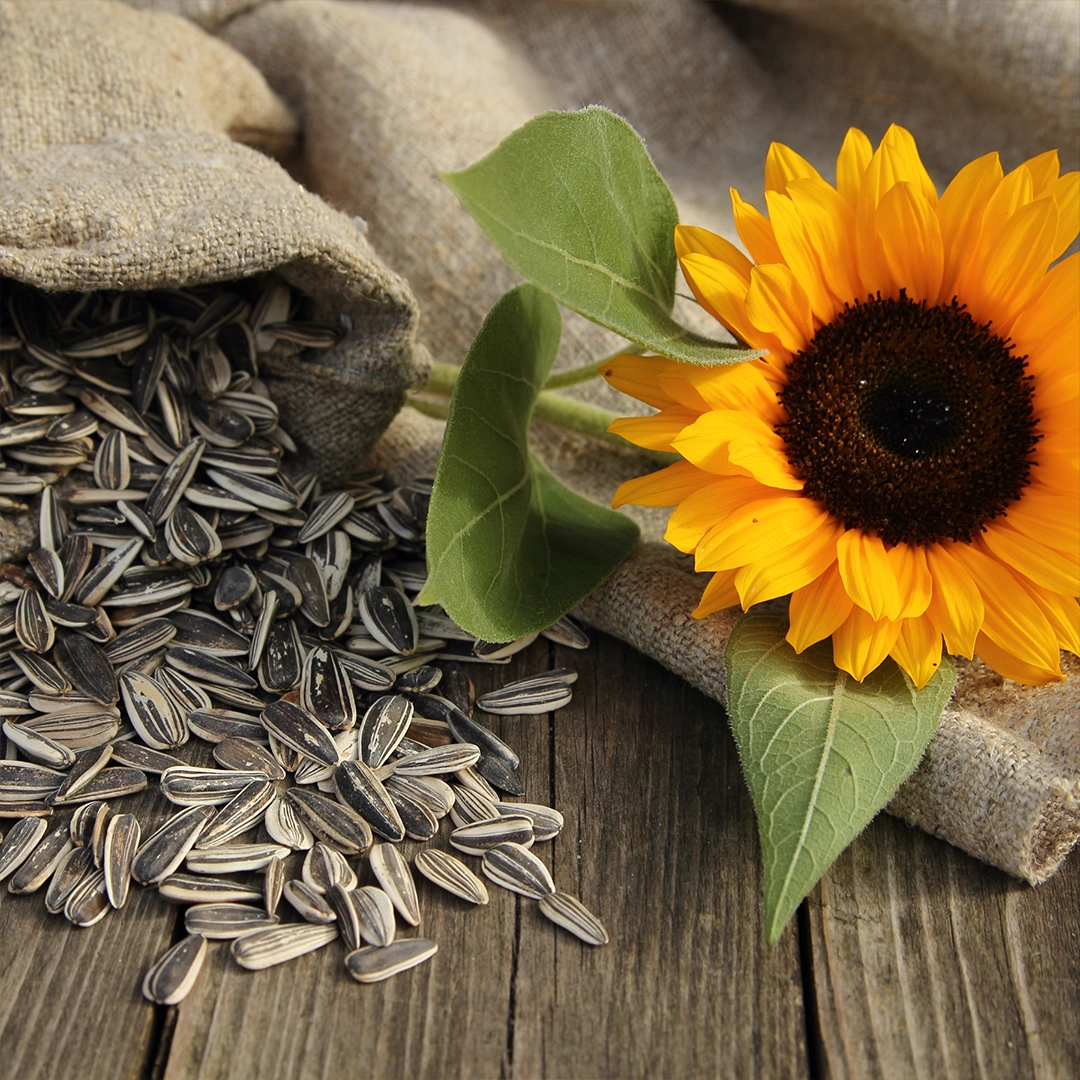
rubyni® Biotin Plus at a Glance
rubyni Biotin Plus is a dietary supplement made from natural and standardized plant extracts:
- The extract from sunflower seeds (Helianthus annuus) and cilantro leaves (Coriandrum sativum) naturally provides biotin (vitamin B7). Both raw materials come from certified organic cultivation in India. They are gently processed using lemon juice and coconut vinegar as natural solvents.
- Biotin is combined with beta-carotene, a carotenoid that gives carrots their characteristic color. It is a natural precursor to vitamin A. For our product, we use a gently extracted extract from carrots ( Daucus carota subsp. sativus ), which is free of fructose.
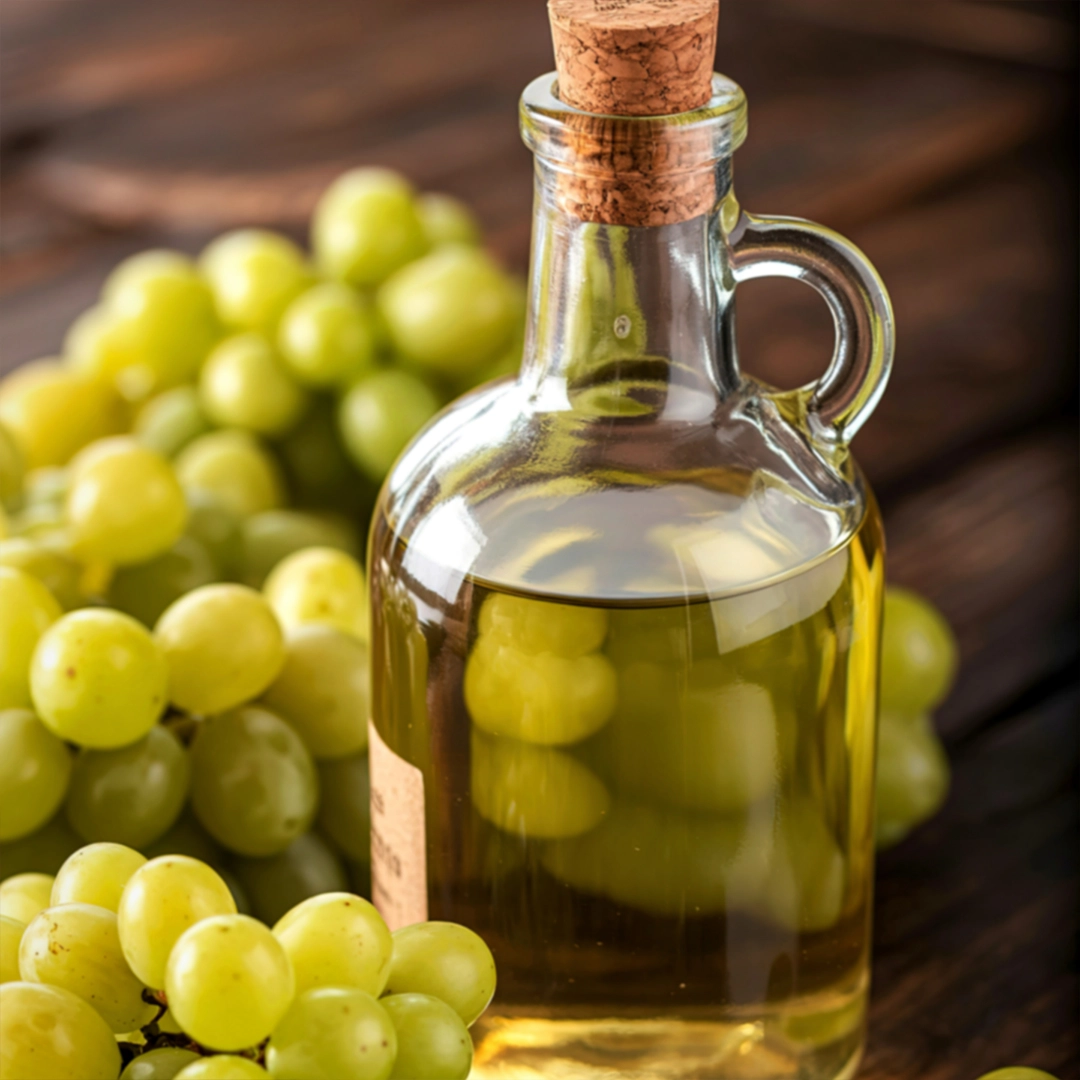
- rubyni Biotin Plus is rounded out with a pure extract of grape seeds (Vitis vinifera) and olives (Olea europaea). It provides two phytochemicals from the polyphenol family: OPC (oligomeric proanthocyanidins) and hydroxytyrosol. The raw materials come from France and are standardized for their polyphenol content.
How can beta-carotene help improve your vision?
The beta-carotene contained in this product is a precursor to vitamin A. This means your body can convert beta-carotene into vitamin A. Like biotin, vitamin A helps maintain normal skin and mucous membranes.1,7
In addition, vitamin A helps maintain normal vision: In the form of retinal, the vitamin is a component of what is known as visual purple and thus plays a role in the visual process. This light-sensitive pigment is found in high concentrations in the rods, the elongated light-sensing cells in the retina of the eye. The rods are primarily responsible for light-dark vision.6,12,13


Good to know:
Biotin – Not Just for Skin and Hair
Biotin (vitamin B7) is also known as vitamin H. This refers to its importance for hair and skin.10 Biotin helps maintain normal hair and skin—as well as normal mucous membranes.1
In addition, biotin performs other functions in your body: It contributes to normal energy metabolism, as well as to the normal metabolism of macronutrients. These include carbohydrates (sugars), proteins, and fats. Biotin also plays a role in the normal functioning of the nervous system and normal psychological function.1,11
What roles do biotin and beta-carotene play in the body (health claims)?
Biotin (vitamin B7) supports a wide range of functions in your body:1,11
Biotin
- helps maintain normal hair
- helps maintain normal skin
- helps maintain healthy mucous membranes
- contributes to normal macronutrient metabolism
- contributes to normal energy metabolism
- contributes to the normal functioning of the nervous system
- contributes to normal psychological function
The beta-carotene contained in rubyni Biotin Plus is a precursor to vitamin A (provitamin A). Vitamin A also performs various functions in the body:7
Vitamin A
- helps maintain normal skin
- helps maintain healthy mucous membranes
- helps maintain normal vision
- contributes to normal iron metabolism
- contributes to the normal functioning of the immune system
- plays a role in cell specialization
Frequently Asked Questions (FAQ)
1. What makes rubyni® Biotin Plus so special?
rubyni Biotin Plus consists of several standardized plant extracts: sunflower seeds and cilantro leaves provide natural sources of biotin (vitamin B7), while carrots provide natural beta-carotene, a precursor to vitamin A (provitamin A). It also contains two polyphenols: OPC (oligomeric proanthocyanidins) from grape seeds and hydroxytyrosol from olives.
2. Is rubyni Biotin Plus vegan, lactose-free, and gluten-free?
Yes, rubyni Biotin Plus is 100% vegan: The biotin comes from an organic extract of sunflower seeds (Helianthus annuus) and cilantro leaves (Coriandrum sativum), and the beta-carotene (provitamin A) comes from a carrot extract. It also contains two polyphenols: OPC (oligomeric proanthocyanidins) and hydroxytyrosol, which are derived from grape seed and olive extracts. All plant extracts are enclosed in a vegetable capsule made from hydroxypropyl methylcellulose. Furthermore, the ingredients are lactose- and gluten-free.
3. How many rubyni® Biotin Plus capsules should I take each day?
The recommended intake for healthy adults is one rubyni Biotin Plus capsule daily—taken with sufficient water, without chewing, and with a meal. To ensure proper absorption of the fat-soluble beta-carotene, the meal should also contain healthy fats. One capsule provides 50 µg of biotin (100% of the NRV*) and 2.4 mg of beta-carotene (50% of the NRV*).
*NRV = Nutrient Reference Value (for adults, as defined by the Food Information Regulation (LMIV))
4. What roles does biotin play in the body?
Biotin (vitamin B7) performs various functions in your body: It contributes to normal energy metabolism and to the normal metabolism of macronutrients (carbohydrates, proteins, and fats). Biotin also contributes to the normal functioning of the nervous system and to normal psychological function. In addition, this vitamin plays a role in maintaining normal skin, hair, and mucous membranes.
4. What is the function of beta-carotene?
Beta-carotene is what is known as a provitamin A, a precursor to vitamin A. The body can convert it into the active form of the vitamin as needed. Among other things, vitamin A helps maintain normal skin and mucous membranes, as well as normal vision.
References:
1 Commission Regulation (EU) No. 432/2012 of May 16, 2012, establishing a list of permitted other health claims made on foods, other than those referring to the reduction of disease risk and to children’s development and health. As of August 20, 2025. https://eur-lex.europa.eu/legal-content/DE/TXT/?uri=CELEX%3A02012R0432-20250820, last accessed on March 23, 2026
2 Solvik BS et al. Biotin: A Scoping Review for the Nordic Nutrition Recommendations 2023. Food Nutr Res. Jan. 16, 2024; 68:10256. https://pmc.ncbi.nlm.nih.gov/articles/PMC10845898/, last accessed on July 17, 2026
3 VitaminDoctor.com. Biotin: Not Just a Beauty Vitamin. As of August 27, 2024. https://www.vitamindoctor.com/naehrstoffe/vitamine/biotin, last accessed on July 17, 2026
4 German Nutrition Society (DGE). Reference Values: Biotin. As of 2020. https://www.dge.de/wissenschaft/referenzwerte/biotin/, last accessed on March 23, 2026
5 Regulation (EU) No. 1169/2011 of the European Parliament and of the Council of October 25, 2011. https://eur-lex.europa.eu/legal-content/DE/TXT/PDF/?uri=CELEX:32011R1169&from=EN, last accessed on March 23, 2026
6 EFSA NDA Panel. Scientific Opinion on Vitamin A. EFSA Journal 2009; 7(9): 1221. [ID 14, 14, 15, 17, 16, 13, 17, 13, 17, 17, 17, 206, 209]. https://efsa.onlinelibrary.wiley.com/doi/pdf/10.2903/j.efsa.2009.1221, last accessed on July 17, 2026
7 German Nutrition Society (DGE). Selected Questions and Answers About Vitamin A. Updated: September 10, 2025. https://www.dge.de/gesunde-ernaehrung/faq/ausgewaehlte-fragen-und-antworten-zu-vitamin-a/, last accessed on July 17, 2026
8 National Institutes of Health (NIH). Vitamin A and Carotenoids. https://ods.od.nih.gov/factsheets/VitaminA-HealthProfessional/, last accessed on July 17, 2026
9 German Nutrition Society (DGE). Reference Values: Vitamin A. As of 2020. https://www.dge.de/wissenschaft/referenzwerte/vitamin-a/, last accessed on July 17, 2026
10 VerbraucherFenster Hessen. Biotin—a vitamin for hair and skin. As of: 09/2018. https://verbraucherfenster.hessen.de/ernaehrung/vitamine-mineralstoffe/biotin-ein-vitamin-fuer-haare-und-haut, last accessed on July 17, 2026
11 German Nutrition Society (DGE). Selected Questions and Answers About Biotin. Updated: September 10, 2025. https://www.dge.de/gesunde-ernaehrung/faq/biotin/, last accessed on July 17, 2026
12 DocCheck Flexikon. Rhodopsin. Last updated: May 25, 2025. https://flexikon.doccheck.com/de/Rhodopsin, last accessed on July 17, 2026
13 Pharmazeutische Zeitung – online. Better vision thanks to beta-carotene. https://www.pharmazeutische-zeitung.de/pharm4-06-2001/, last accessed on July 17, 2026