
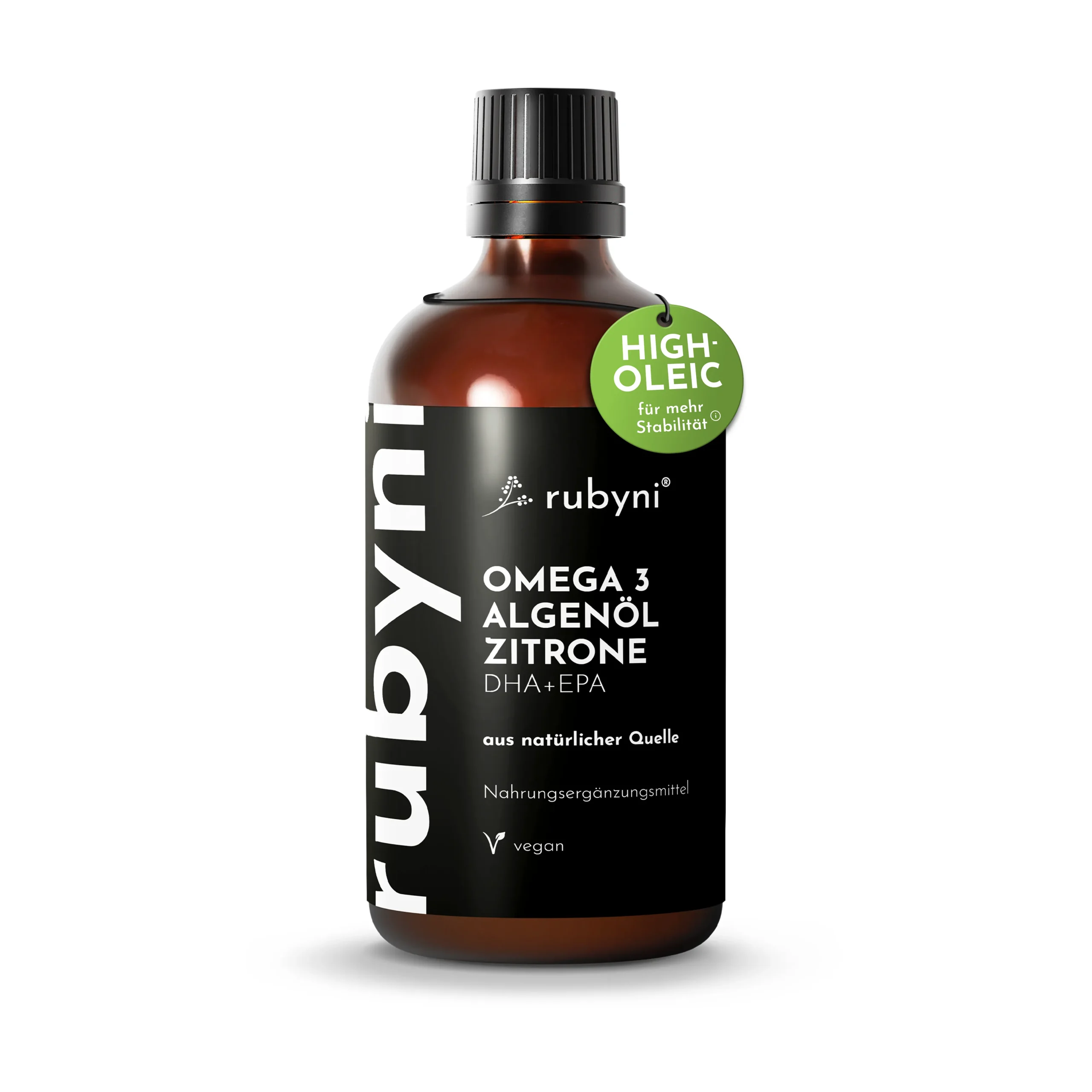

rubyni® Omega-3
Omega-3 fatty acids from 100% plant-based sources
Dietary supplement containing oil rich in DHA and EPA derived from the microalga Schizochytrium sp.,100% vegan and lactose-free
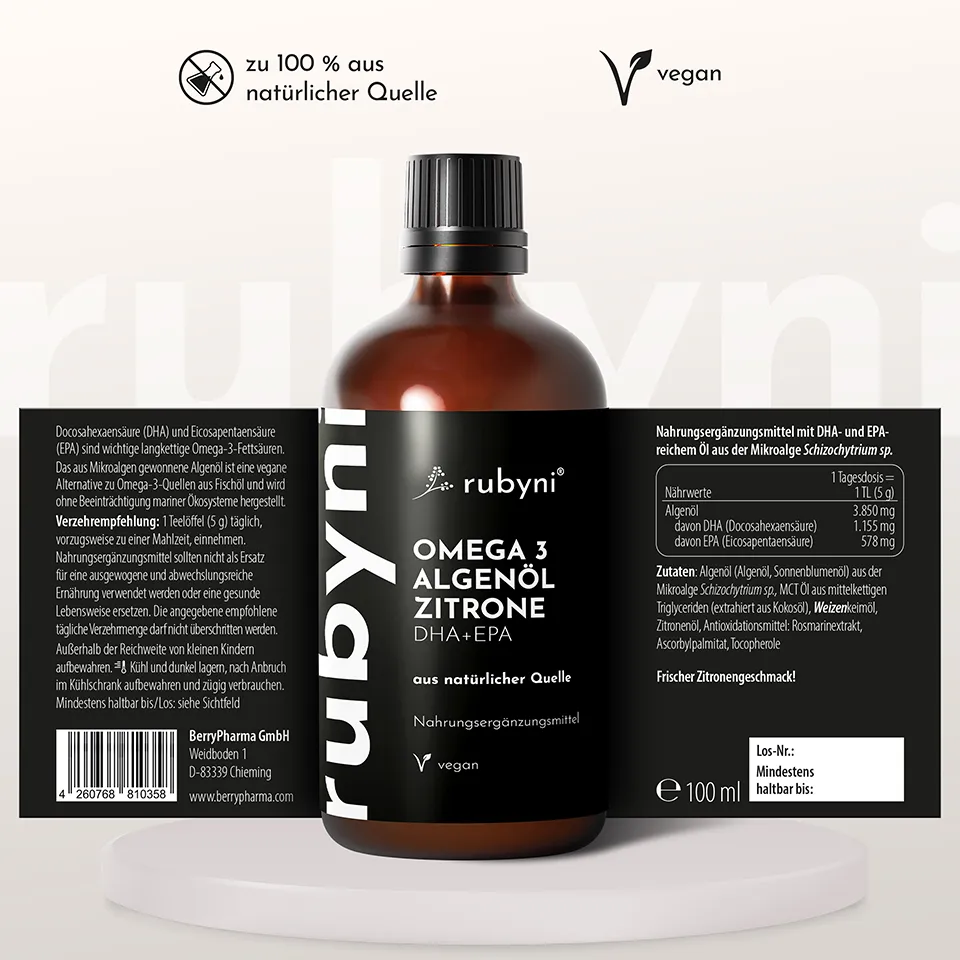
Ingredients: Algae oil (algae oil, sunflower oil) from the microalga Schizochytrium sp., MCT oil from medium-chain triglycerides (extracted from coconut oil), wheat germ oil*, lemon oil, antioxidants: rosemary extract, ascorbyl palmitate, tocopherols.
*The wheat germ oil contained in this product is labeled as an allergen as a precautionary measure in accordance with legal requirements. However, the analyzed gluten content is below 20 ppm (mg/kg) and thus meets the EU criteria for the “gluten-free” designation.
Recommended Use: Take 1 teaspoon (5 g) of algae oil daily, preferably with a meal. These recommendations are intended for healthy adults. Do not exceed the stated recommended daily intake.
Suitable at-home lab test:You can easily have youromega-3 index measured at home. You can find the right at-home lab test here.
Note: People taking anticoagulant medications are advised to consult a doctor before consuming omega-3 supplements. Dietary supplements should not be used as a substitute for a balanced and varied diet or replace a healthy lifestyle.
Storage: Omega-3 fatty acids are highly susceptible to oxidation. Therefore, store the Omega-3 Algae Oil (Lemon) in a cool, dark place; once opened, keep it in the refrigerator and consume it promptly.
60 capsules €59.90
Includes VAT, plus shipping


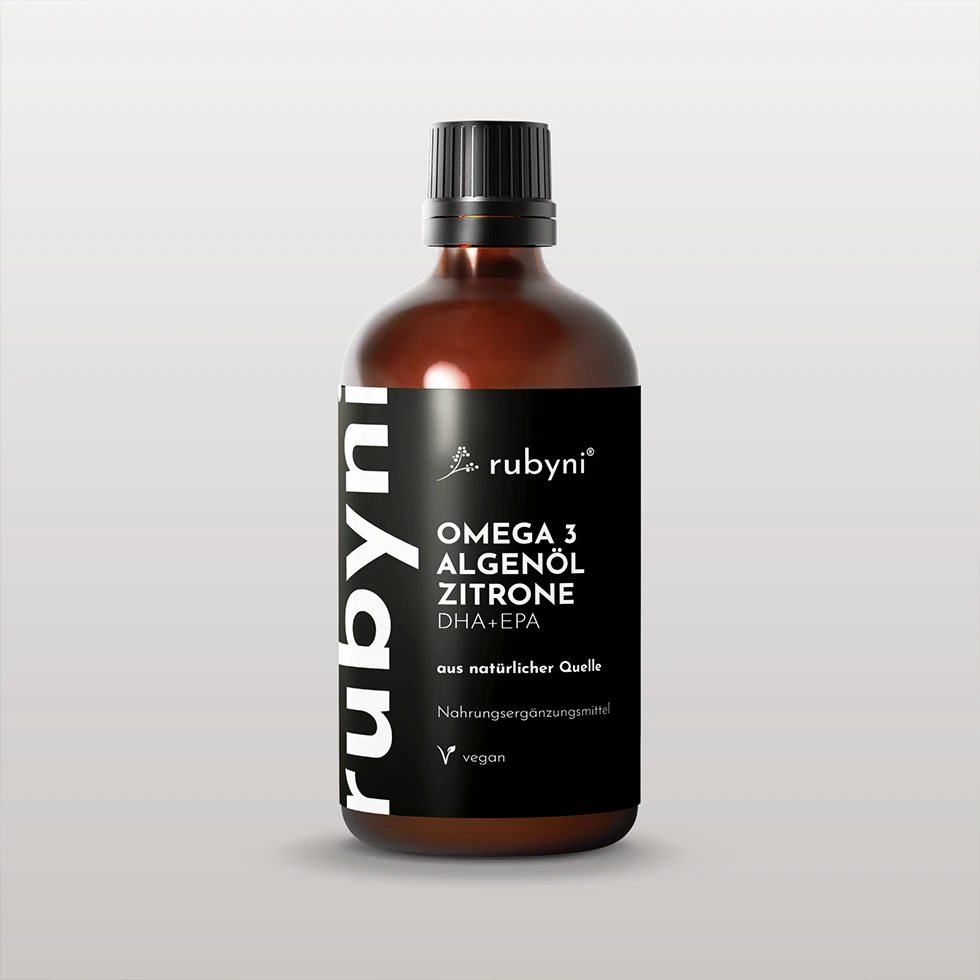
rubyni® Omega-3 Algae Oil with Lemon, from a Natural Source
For our rubyni Omega-3 Algae Oil with Lemon, we use purely plant-based raw materials, including the microalgae Schizochytrium sp. It naturally contains the long-chain, polyunsaturated omega-3 fatty acids EPA and DHA and can be cultivated in a resource-efficient manner. The subtle citrus note gives the algae oil a pleasantly fresh taste.
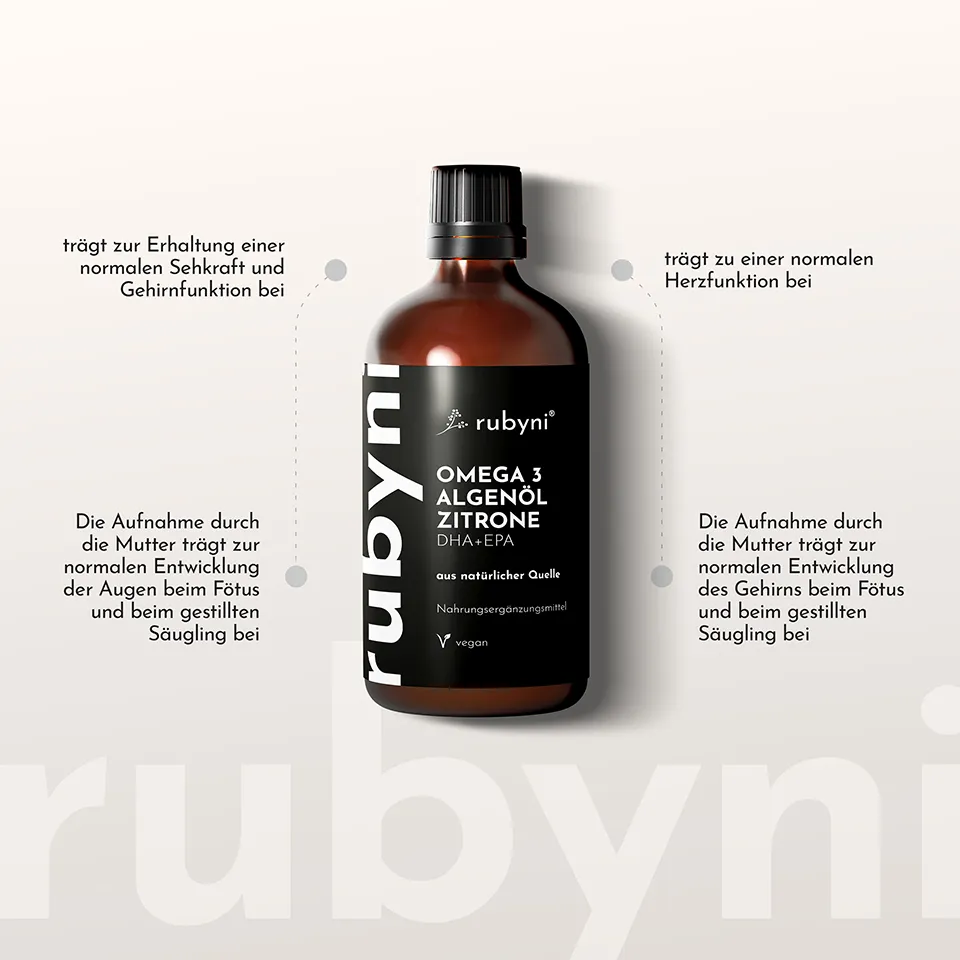
Omega-3 fatty acids play a role in various processes in your body. EPA and DHA contribute to normal heart function. DHA also supports normal brain function and normal vision.1,2
- Algae oil from microalgae (Schizochytrium sp.) cultivated in aquaculture—without utilizing marine fish stocks
- One teaspoon (5 g) provides you with important omega-3 fatty acids: 1,155 mg of DHA (docosahexaenoic acid) and 578 mg of EPA (eicosapentaenoic acid)
- With a subtle hint of lemon
- Vegan, lactose-free, gluten-free, andiodine-free³
1 The positive effect is achieved with a daily intake of 250 mg EPA and DHA.
2 The positive effect is achieved with a daily intake of 250 mg DHA.
3 The algae come from aquacultures without seawater, which is why they do not contain iodine.

What exactly are omega-3 fatty acids?
The term “omega-3 fatty acids” is a collective term that refers to specific polyunsaturated fatty acids. Among the most important omega-3 fatty acids are the two long-chain fatty acids docosahexaenoic acid (DHA) and eicosapentaenoic acid (EPA).3
Your body can produce them only in very small amounts. To ensure an adequate supply, it therefore relies on obtaining omega-3 fatty acids from your diet.4 Traditionally, cold-water fish such as salmon, herring, and mackerel are considered good sources of animal protein.5 Fish oil capsules are typically made from parts of edible fish, from which the oil is extracted and, in some cases, further concentrated.
However, there is also a plant-based alternative: algae oil. The microalgae Schizochytrium sp.. It naturally contains high levels of DHA and, depending on the algae strain, EPA as well. It is therefore an excellent source of these important fatty acids—especially for people who follow a vegetarian or vegan diet, or who simply don’t like fish (or its taste).
How much omega-3 fatty acids does your body need?
The German Nutrition Society (DGE) recommends—as part of a balanced diet—one to two servings of fish per week, including 70 g of fatty ocean fish.6,7 This is equivalent to approximately 300 to 600 mg of EPA and DHA per day. However, most people eat fish less frequently or not at all.
According to the DGE, based on current data, 250 mg of EPA and DHA per day is sufficient for healthy adults. The organization also recommends that pregnant and breastfeeding women consume an additional average of at least 200 mg of docosahexaenoic acid per day.7,8
In addition, individual factors such as diet or lifestyle can influence daily intake of omega-3 fatty acids. The European Food Safety Authority (EFSA) considers daily intakes of up to 5 g of EPA and DHA (combined) or 1.8 g of EPA (alone) to be safe for adults.9
Based on this, the following guideline applies: The total daily intake of 5 g of EPA and DHA should not be exceeded.


The Omega-3 Index as a Measure
Would you like to know how well you’re getting these valuable fatty acids? If so, you can have your individual omega-3 index checked by a doctor or naturopath. This laboratory value is considered a long-term biomarker and measures the proportion of the two omega-3 fatty acids, EPA and DHA, in the membranes of red blood cells. In the scientific literature, values between 8 and 11 percent are often discussed as a possible target range.10
Omega-3 or omega-6? It all depends on the balance!
In addition to omega-3 fatty acids, there are also omega-6 fatty acids. They are found in various foods, such as vegetable oils and animal fats. The ratio of omega-6 to omega-3 fatty acids is frequently discussed in the scientific literature. Various guideline values are described, including ratios of 5:1 or lower. However, Western-style diets often provide many times more omega-6 fatty acids and a smaller proportion of omega-3 fatty acids. 11
High-Oleic Sunflower Oil: Unique Properties, Exceptional Quality
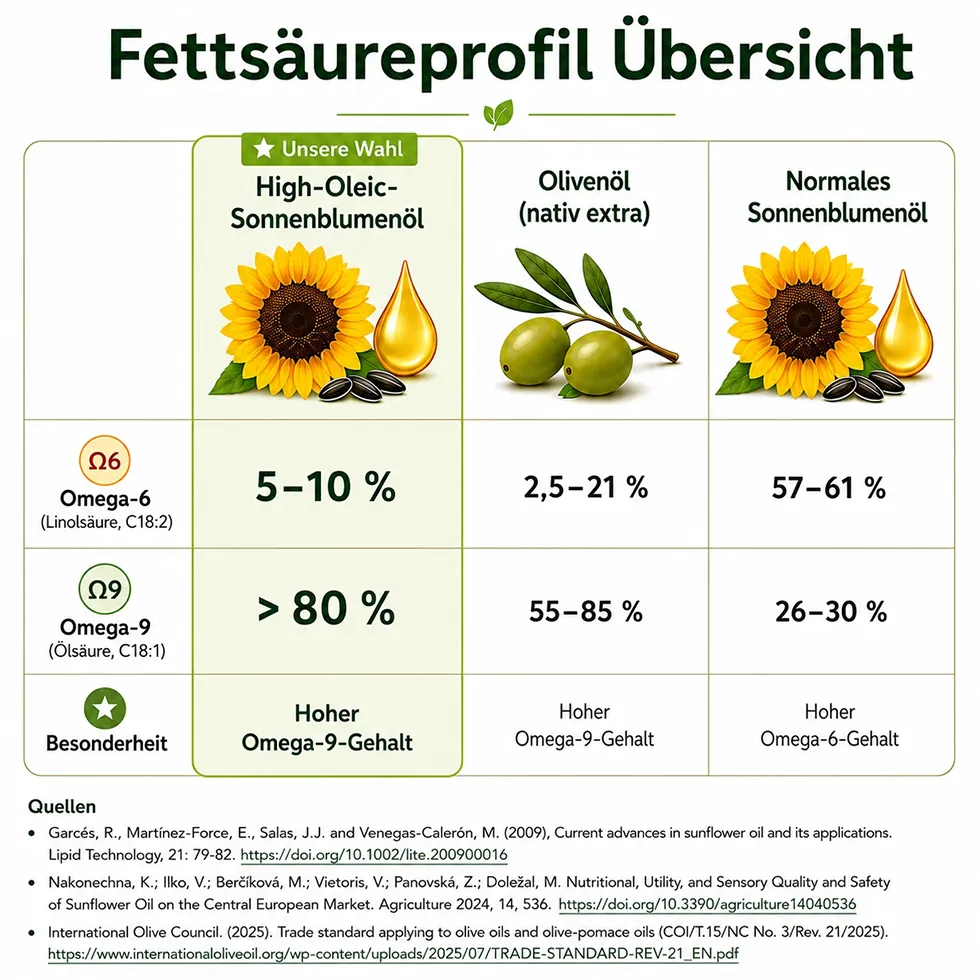
High-oleic sunflower oil with a high oleic acid content—a high-quality alternative with a fatty acid profile comparable to that of olive oil.
Good to know: High-oleic sunflowers are produced through traditional plant breeding and natural selection—not through genetic engineering.
Fatty Acid Profile Overview
|
Property
|
High-Oleic Sunflower Oil
|
Olive Oil (extra virgin) |
Regular sunflower oil
|
|
Omega-6 (linoleic acid, C18:2)
|
5–10%
|
2.5–21%
|
57–61%
|
|
Omega-9 (oleic acid, C18:1)
|
> 80%
|
55–85%
|
26–30%
|
|
Special Feature
|
High omega-9 content
|
High omega-9 content
|
High omega-6 content
|
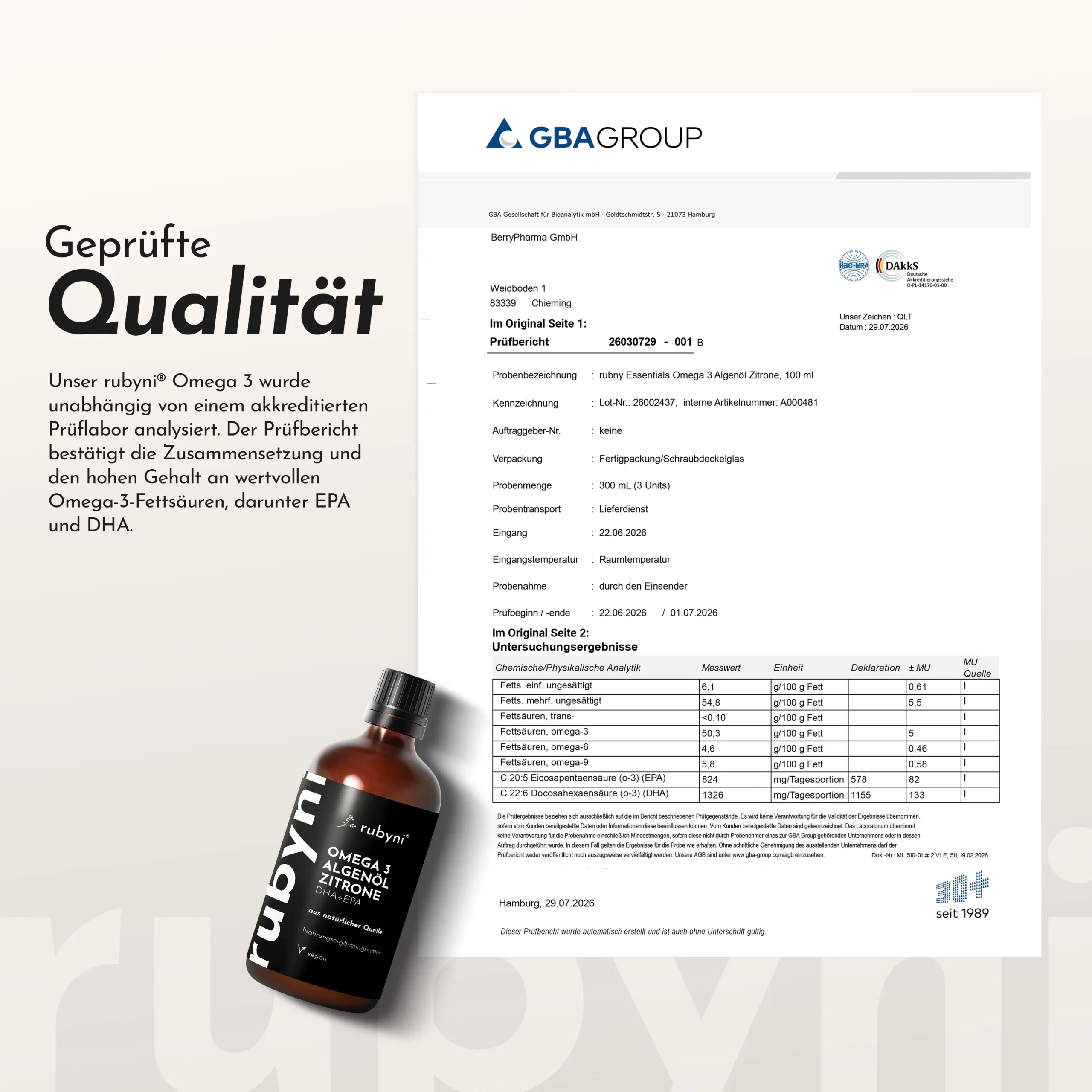
Rubyni Omega-3 Algae Oil (Lemon) has a low omega-6 content of 4.6%, promoting a balanced omega-3 fatty acid profile (GBA Test Report 26030729 dated July 1, 2026 —original shown above in the product image slideshow). 21,22,23
rubyni® Omega-3 Algae Oil with Lemon at a Glance
rubyni Omega-3 Algae Oil Lemon is a dietary supplement that contains omega-3 fatty acids (DHA + EPA) from a purely plant-based source (algae). It is a blend of various oils:
- The largest component is high-quality algae oil, which naturally contains the omega-3 fatty acids DHA and EPA. It is extracted from the microalgae Schizochytrium sp., whichcan be cultivated in a resource-efficient manner without relying on fish stocks.
- To protect the sensitive omega-3 fatty acids and improve the flow properties of the algae oil, so-called high-oleic sunflower oil is added to it. It contains fewer omega-6 fatty acids than conventional sunflower oil but, instead, has a high proportion of omega-9 fatty acids (= monounsaturated fatty acids), primarily oleic acid.
- MCT oil, derived from coconut oil, complements the formula and is characterized by its neutral taste.
- Lemon oil adds a fruity citrus note.
The TOTOX Value—An Indicator of the Freshness of Omega-3 Oils
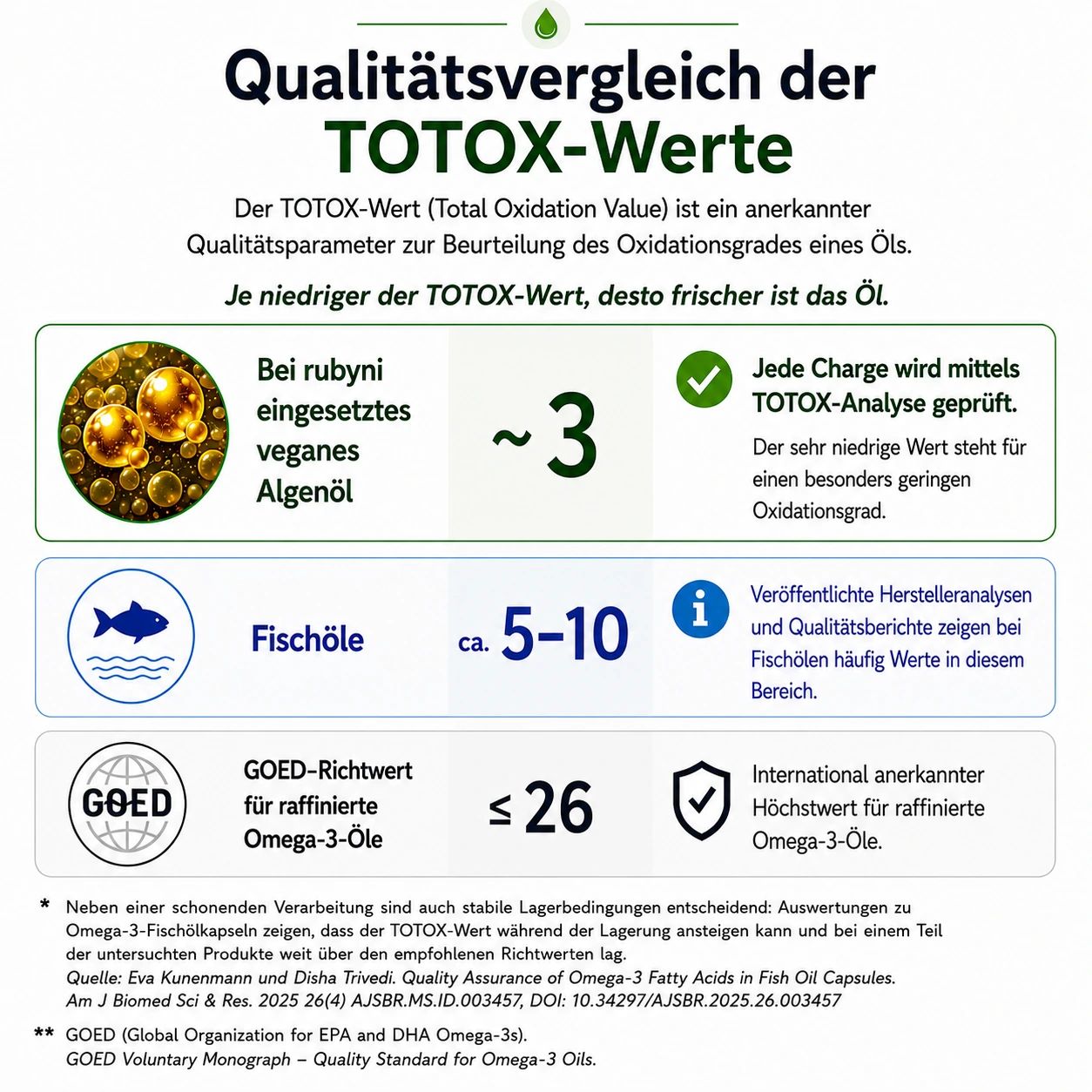
Omega-3 oils are sensitive to oxygen and can oxidize over time. The so-called TOTOX value indicates how far this oxidation process has already progressed. The TOTOX value (Total Oxidation Value) is a quality parameter used to assess the degree of oxidation in an oil. As a general rule, the lower the TOTOX value, the fresher and less oxidized the oil is.
Our rubyni Quality Standards
Purity and freshness are our top priorities in the production of our rubyni Omega-3 Algae Oil with Lemon. The algae oil is processed in small batches under consistently refrigerated conditions. Each batch of algae oil used is tested via TOTOX analysis and achieves a particularly low oxidation level, with a value of ~3.
| Quality Comparison | TOTOX Value | Classification |
| Vegan algae oil used in rubyni | ~ 3 | Each batch is tested using TOTOX analysis. The very low value indicates a particularly low degree of oxidation. |
| Fish oils | approx. 5–10 | Published manufacturer analyses and quality reports often show values in this range for fish oils.* |
| GOED Guideline Value for Refined Omega-3 Oils | ≤ 26 | Internationally recognized upper limit for refined omega-3 oils.** |
*In addition to gentle processing, stable storage conditions are also crucial: Analyses of omega-3 fish oil capsules show that the TOTOX value can increase during storage and, in some of the products tested, was well above the recommended guidelines.
Source: Eva Kuennemann and Disha Trivedi. Quality Assurance of Omega-3 Fatty Acids in Fish Oil Capsules. Am J Biomed Sci & Res. 2025 26(4) AJBSR.MS.ID.003457, DOI: 10.34297/AJBSR.2025.26.003457
**GOED (Global Organization for EPA and DHA Omega-3s). GOED Voluntary Monograph – Quality Standard for Omega-3 Oils.

Good to know:
Omega-3 Fatty Acids for Various Bodily Functions
Omega-3 fatty acids are, on the one hand, a component of all cell membranes in the body and, on the other hand, serve as precursors for important signaling molecules. They play a role in regulating various functions in the body.1
Omega-3 Fatty Acids and the Heart
EPA and DHA contribute to normal heart function. The beneficial effect is achieved with a daily intake of 250 mg of EPA and DHA.2
Omega-3 Fatty Acids and the Brain
Your brain performs countless tasks every day. DHA helps maintain normal brain function. The beneficial effect is observed with a daily intake of 250 mg of DHA. Scientific reviews examine the role that omega-3 fatty acids may play in brain function.13,14 Thesefatty acids are the subject of numerous research studies across various age groups.15,16
Omega-3 Fatty Acids and Vision
DHA helps to maintain your normal vision because omega-3 fatty acids are a natural component of the retina. Numerous scientific studies have investigated the relationship between DHA levels and vision.17,18
Why are omega-3 fatty acids so important during pregnancy?
Pregnant and breastfeeding women are recommended to consume at least 200 mg of DHA per day—in addition to the recommended daily intake of omega-3 fatty acids for adults, which is 250 mg of DHA and EPA. This is because the mother provides her child with these essential fatty acids. Thus, the mother’s intake of DHA contributes to the normal development of the eyes in the fetus and in the breastfed infant. Similarly, the mother’s intake of DHA contributes to the normal development of the brain in the fetus and in the breastfed infant.
The developing brain accumulates large amounts of DHA—both in the fetus and in children during the first two years of life.17,18,19


What role do omega-3 fatty acids play in the body? (Health Claims)
Long-chain unsaturated fatty acids play a role in various bodily functions:
Eicosapentaenoic acid (EPA) and DHA contribute to normal heart function. The beneficial effect is achieved with a daily intake of 250 mg of EPA and DHA.2
Docosahexaenoic acid (DHA) helps maintain normal brain function and normal vision. The beneficial effect is achieved with a daily intake of 250 mg of DHA.2
DHA and EPA for Pregnant and Breastfeeding Women: The mother’s intake of DHA contributes to the normal development of the eyes in the fetus and in breastfed infants. This beneficial effect occurs when 200 milligrams of DHA are consumed daily in addition to the recommended daily intake of omega-3 fatty acids for adults (250 mg of DHA and EPA).20
DHA for Pregnant and Breastfeeding Women: A mother’s intake of DHA contributes to the normal brain development of the fetus and the breastfed infant. This beneficial effect occurs when 200 mg of DHA is consumed daily in addition to the recommended daily intake of omega-3 fatty acids for adults (250 mg of DHA and EPA).20
What makesrubyni® Omega-3 Algae Oil (Lemon) so special?
Rubyni Omega-3 Algae Oil Lemon is an algae oil derived from the microalga Schizochytrium sp., which is rich in the omega-3 fatty acids DHA (docosahexaenoic acid) and EPA (eicosapentaenoic acid). The algae oil is supplemented with high-quality high-oleic sunflower oil that has a reduced content of omega-6 fatty acids. This helps maintain the stability of the algae oil and protect the sensitive omega-3 fatty acids from oxidation. The subtle citrus note gives the oil a pleasant taste.
How much rubyni Omega 3 algae oil lemon should I take daily?
The recommended daily intake for healthy adults is one teaspoon (5 g) of rubyni Omega-3 Algae Oil Lemon—preferably with a meal. This provides you with 1,155 mg of DHA (docosahexaenoic acid) and 578 mg of EPA (eicosapentaenoic acid).
Is rubyni Omega 3 algae oil lemon vegan and iodine-free?
Yes, rubyni Omega-3 Algae Oil Lemon is made from 100% vegan ingredients, as all the oils it contains are of plant origin: The omega-3 fatty acids DHA and EPA are derived from the microalgae Schizochytrium sp. The algae oil is combined with high-oleic sunflower oil, MCT oil from coconut oil, as well as wheat germ oil and lemon oil. Since the algae comes from aquaculture systems that do not use seawater, our algae oil contains no iodine.
Omega-3 & Omega-6 Fatty Acids: Why Does the Ratio Matter?
The ratio of omega-6 to omega-3 fatty acids is also frequently discussed in the scientific literature. Omega-6 fatty acids are found, for example, in vegetable oils and animal fats. Various guideline values are described, including ratios of 5:1 or lower. However, Western-style diets often provide many times more omega-6 fatty acids and a smaller proportion of omega-3 fatty acids.
What roles do omega-3 fatty acids play in the body?
The omega-3 fatty acids DHA (docosahexaenoic acid) and EPA (eicosapentaenoic acid) contribute to normal heart function. This beneficial effect is achieved with a daily intake of 250 mg of EPA and DHA. In addition, DHA contributes to the maintenance of normal brain function and normal vision. This beneficial effect is achieved with a daily intake of 250 mg of DHA.
References:
1 DocCheckFlexikon. Omega-3 fatty acids. Updated November 24, 2023. https://flexikon.doccheck.com/de/Omega-3-Fetts%C3%A4ure, accessed February 12, 2026
2 European Union. Euro-Lex. Consolidated text: Commission Regulation (EU) No 432/2012 of 16 May 2012 establishing a list of permitted health claims made on foods, other than those referring to the reduction of disease risk and to children’s development and health (Text with EEA relevance). Status 20.08.2025. https://eur-lex.europa.eu/legal-content/EN/TXT/?uri=CELEX%3A02012R0432-20250820, last accessed on 12.02.2026
3 Austrian Public Health Portal. Omega-3 fatty acids. https://www.gesundheit.gv.at/lexikon/O/lexikon-omega-drei-fettsaeuren.html, last accessed on 12.02.2026
4 Norddeutscher Rundfunk (NDR). Essential Omega-3 Fatty Acids: The Right Dosage Is Crucial. As of October 8, 2025. https://www.ndr.de/ratgeber/gesundheit/Lebenswichtige-Omega-3-Fettsaeuren-Richtige-Dosierung-entscheidend,fettsaeuren100.html, last accessed on February 12, 2026
5 Fisch-Informationszentrum e.V. (FIZ). Omega-3 Fatty Acids: The Fat That Keeps You Healthy.
https://www.fischinfo.de/index.php/verbraucher/ernaehrung-gesundheit/103-gesund-und-fit-mit-fisch/80-omega-3-das-fett-das-fit-macht, last accessed on February 12, 2026
6 German Nutrition Society (DGE). Fish every week. https://www.dge.de/gesunde-ernaehrung/gut-essen-und-trinken/dge-empfehlungen/fisch/, last accessed on 12.02.2026
7 German Nutrition Society (DGE). Serve fish regularly! https://www.dge.de/presse/meldungen/2011-2018/less-meat-on-your-plate-protects-the-climate/dge-recommends-paying-attention-to-fat-content-and-quality/serve-fish-regularly/, last accessed on February 12, 2026
8 German Nutrition Society (DGE). Fat, Essential Fatty Acids. https://www.dge.de/wissenschaft/referenzwerte/fett-essenzielle-fettsaeuren/, last accessed on February 12, 2026
9 EFSA Panel on Dietetic Products, Nutrition, and Allergies (NDA); Scientific Opinion on the Tolerable Upper Intake Level of eicosapentaenoic acid (EPA), docosahexaenoic acid (DHA), and docosapentaenoic acid (DPA). EFSA Journal 2012; 10(7):2815. [48 pp.].https://efsa.onlinelibrary.wiley.com/doi/10.2903/j.efsa.2012.2815
10 Burgerstein Foundation. The Omega-3 Index—a laboratory parameter with significant preventive value. As of May 30, 2025. https://www.burgerstein-foundation.ch/de-DE/fachbereich/aktuelles-aus-wissenschaft-praxis/der-omega-3-index-ein-laborparameter-mit-hoher-praventiver-bedeutung, last accessed February 12, 2026
11 Apotheken Umschau. Why Omega-3 Fatty Acids Are So Important for Health. June 11, 2025. https://www.apotheken-umschau.de/gesund-bleiben/ernaehrung/omega-3-fettsaeure-als-multitalent-1326149.html, last accessed on February 12, 2026
12 McBurney, Michael I et al. Using an erythrocyte fatty acid fingerprint to predict risk of all-cause mortality: the Framingham Offspring Cohort. The American Journal of Clinical Nutrition vol. 114, no. 4 (2021): 1447–1454. https://www.sciencedirect.com/science/article/pii/S0002916522004737
13 Külzow N et al. Impact of Omega-3 Fatty Acid Supplementation on Memory Functions in Healthy Older Adults. J Alzheimers Dis. 2016; 51 (3): 713-25. https://journals.sagepub.com/doi/10.3233/JAD-150886
14 Dighriri IM et al. Effects of Omega-3 Polyunsaturated Fatty Acids on Brain Functions: A Systematic Review. Cureus. 2022 Oct 9; 14 (10): e30091. https://pmc.ncbi.nlm.nih.gov/articles/PMC9641984/
15 Borasio, F., et al. “Associations between Dietary Intake, Blood Levels of Omega-3 and Omega-6 Fatty Acids, and Reading Abilities in Children.” https://www.mdpi.com/2218-273X/13/2/368
16 Yasseen DG et al. Polyunsaturated fatty acid supplementation can improve specific language impairment in preschool children: a pilot study. https://link.springer.com/article/10.1186/s41983-020-0158-8
17 Deutsche Apotheker Zeitung. DHA During Pregnancy—What Is It For and How Much? As of January 4, 2023. https://www.deutsche-apotheker-zeitung.de/news/artikel/2023/01/04/dha-in-der-schwangerschaft-wofuer-und-wieviel, last accessed on February 12, 2026
18 Van Dael, Peter. “Role of n-3 long-chain polyunsaturated fatty acids in human nutrition and health: review of recent studies and recommendations.” *Nutrition Research and Practice*, vol. 15, no. 2 (2021): 137–159. https://pmc.ncbi.nlm.nih.gov/articles/PMC8007408/
19 Commission Regulation (EU) No. 440/2011 of May 6, 2011, on the authorization or non-authorization of certain health claims made on foods regarding children’s development and health. Text of relevance to the EEA. https://eur-lex.europa.eu/legal-content/DE/ALL/?uri=CELEX:32011R0440
20 German Food Association. Dietary Supplements Containing Omega-3 Fatty Acids. https://www.lebensmittelverband.de/de/lebensmittel/nahrungsergaenzungsmittel/nahrungsergaenzung-naehrstoffe/nem-omega-3-epa-dha, last accessed on February 12, 2025
21 Garcés , R., Martínez-Force, E., Salas, J.J., and Venegas-Calerón, M. (2009), “Current advances in sunflower oil and its applications.” *Lipid Technology*, 21: 79–82. https://doi.org/10.1002/lite.200900016
22 Nakonechna , K.; Ilko, V.; Berčíková, M.; Vietoris, V.; Panovská, Z.; Doležal, M. Nutritional, Utility, and Sensory Quality and Safety of Sunflower Oil on the Central European Market. Agriculture 2024, 14, 536. https://doi.org/10.3390/agriculture14040536
23 International Olive Council. (2025). Trade standard for olive oils and olive-pomace oils (COI/T.15/NC No. 3/Rev. 21/2025). https://www.internationaloliveoil.org/wp-content/uploads/2025/07/TRADE-STANDARD-REV-21_EN.pdf